
Blog
Blog
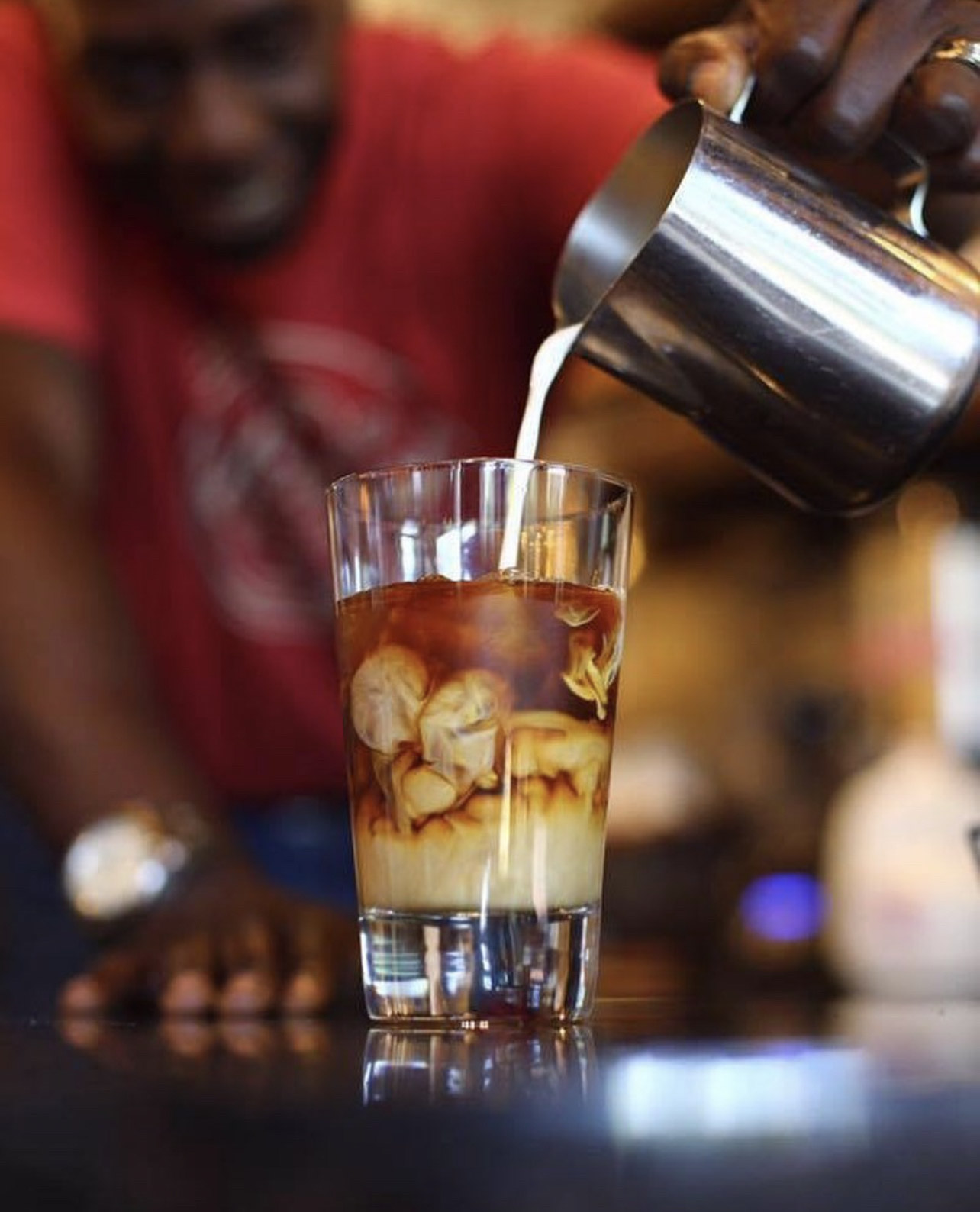
SOFemArt Introduces New Programming Partner Jirani Coffeehouse
"We're excited to share the first of many strategic programming partners The State of Fem Art is collaborating with to curate safe spaces and programming for our community. When we think about alignment, we could not think of an intimate space that feels more welcoming to begin that journey with in Virginia than Jirani Coffeehouse," said SOFemArt Founder, Timea Faulkner.
Following the COVID-19 pandemic of 2020, when SheROCKS event pivoted to a virtual experience, Love Life Media made the decision to establish a community of the women artists it celebrated through the annual showcase. The State of Fem Art became the virtual community-driven extension of the friendships, connection, support, and collaboration which was first cultivated during the in-person event. As the world continues to embrace the importance of human connection, safe spaces, and arts as a form of healing and cultural meaning-making, SOFemArt is working with businesses like Jirani's Coffeehouse to continue to impact women artists.
"Jirani Coffeehouse was founded as a space for gathering, storytelling, and shared humanity. Partnering with The State of Fem Art allows us to live that mission more fully by supporting women in the arts through thoughtful programming, creative expression, and community-centered experiences. We’re excited about what we’ll build together, said Ken Moorman, CEO of Jirani's Coffeehouse.
One of the many program initiatives The State of Fem Art will be hosting at Jirani's is Creatives + Coffee, a creative meet-up for SOFemArt artists + creatives to connect over coffee, good vibes, and creative activities starting in March.
.png)
SOFemArt Top 25 Influential Women in The Arts, Creative Industries, & Tech
.png)

Instagram: @pollyirungu

Instagram: @artfullyawear

Instagram: @komalshahgarg

Instagram: @museummammy

Instagram: @karynlovegrove


Instagram: @natashacr

Instagram: @suzywillow

Instagram: @massahdavid

Instagram: @miattajohnson

Instagram: @courtneyewhitaker


Instagram: @shexshe

Instagram: @elevatedtrash

Instagram: @charlottetaylr

Instagram: @tegaakinola

Instagram: @enyleeparker


Instagram: @thepocketqueen

Instagram: @hammondgal

Instagram: @almostfamous09

Instagram: @besidone


Instagram: @yvettemayorga

Instagram: @hueman_

Instagram: @cecephilips

Instagram: @almendrabertoni

Instagram: @mattaniah.makes

THE STATE OF FEM ART ANNOUNCES DATES FOR THE 2024 SHEROCKS EVENT, A SHIFT ENCOURAGING ACTION DURING WOMEN'S HISTORY MONTH
FOR IMMEDIATE RELEASE
THE STATE OF FEM ART ANNOUNCES DATES FOR THE 2024 SHEROCKS EVENT, A SHIFT ENCOURAGING ACTION DURING WOMEN'S HISTORY MONTH
Washington, DC - March 5, 2024 - The State of Fem Art (SOFemArt) proudly reveals the dates for its highly anticipated annual SheROCKS event, with a different approach this year. This year’s event will take place on September 27th-28th in the nation’s capital, a shift from the event historically taking place in March. Instead of hosting their event during Women’s History month, SOFemArt is using the month to urge others to resource women in the arts and business by investing into women-owned businesses and artists.
Founder Timea Faulkner emphasizes the importance of moving beyond women's empowerment into tangible action, as discussed in her recent Forbes interview. “The State of Fem Art believes that we can make true impact by using Women's History Month as a powerful catalyst to encourage the intentional resourcing of the women in business and arts we say we support and admire. The shift in moving the event to a later date serves as a call for brands and organizations to continue to support women by helping them to flourish beyond Women’s History Month.”
The SheROCKS celebration will kick off with SheROCKS HerStory on March 27th, a day dedicated to inspiring talks, moving stories, networking opportunities, and workshops for women in business and the arts. The event will culminate with the SheROCKS signature event and artist showcase on March 28th, featuring live performances, art installations, film screenings, entertainment, networking, shopping, and more.
Building on the success of last year's decade celebration in 2023, the 2024 SheROCKS event promises an even more impactful and immersive experience. Exclusive invite-only events, surprise announcements, and special guests will be unveiled in the lead-up to the main event.
SheROCKS is an inclusive celebration open to everyone enthusiastic about honoring women as cultural curators shaping our world through their contributions to the arts, business, and technology.
For media inquiries, please contact:
About SheROCKS Event
SheROCKS is a signature event by The State of Fem Art for emerging women artists and entrepreneurs. Each year the event showcases women in performing and visual arts while creating ways to accelerate support among women entrepreneurs.
About The State of Fem Art (SOFemArt)
SOFemArt is a community-driven platform committed to amplifying the voices and work of women artists through mentorship, resources, opportunities, funding, and curation. We do this by putting a lens back on raw talent, putting the resources in the hands of artists, and putting the power of amplification back into the hands of fans to work towards a more equitable arts, entertainment, and tech industry.
Connect with The State of Fem Art
- Website: www.sofemart.com
- Social Media: Instagram | Twitter | Facebook
###

Dazzling Victory: Women Reign Supreme at the 2024 Grammy Awards
The 2024 Grammy Awards proved to be a groundbreaking night for women artists, with a dominating presence across various categories. The energy was palpable, the undertone of support for women artists undeniable, and the stage set for history to be made. One artist who left an indelible mark on the night was none other than Taylor Swift, who etched her name in Grammy history by securing Album of the Year for the fourth time with her masterpiece, 'Midnight.'
Swift's achievement reflects not only her incredible talent but also the power of an incredibly supportive fanbase. In her acceptance speech for Best Pop Vocal Album she said, “ I want to say thank you for the members of the Recording Academy for voting this way, but I know that the way the Recording Academy voted is a direct reflection of the passion of the fans.”. The night was further enriched by the legendary Joni Mitchell, gracing the Grammy stage for her inaugural performance, marking a historic moment in her illustrious career.
Another highlight was the rare live performance of Tracy Chapman, who captivated the audience with a heartfelt rendition of 'Fast Car,' joined by Luke Combs. The collaboration was a powerful intersection of past and present, reminding us of the timeless impact of great music.
Speaking of timeless music, Burna Boy brought out R&B royalty Brandy for his hit 'SITTING ON TOP OF THE WORLD,' the song released in 2023 notably samples Brandy's 1998 song 'TOP OF THE WORLD,' creating a magical blend of world music with R&B.
As we celebrate the influence of women in music, let's take a moment to acknowledge the remarkable women who claimed victory in various categories at the 2024 Grammy Awards:

- Record Of The Year: Miley Cyrus - 'Flowers'
- Courtesy of the Recording Academy® / Getty Images ©Album Of The Year: Taylor Swift - 'Midnight'
- Song Of The Year: Billie Eilish O'Connell and Finneas O'Connell - 'What Was I Made For?' from The Motion Picture "Barbie"
- Best New Artist: Victoria Monét
- Best Pop Solo Performance: Miley Cyrus - 'Flowers'
- Best Pop Duo/Group Performance: SZA Featuring Phoebe Bridgers - 'Ghost In The Machine'
- Best Pop Vocal Album: Taylor Swift - 'Midnight'
- Best Pop Dance Recording: Kylie Minogue - 'Padam Padam'
- Best R&B Performance: CoCo Jones - 'ICU'
- Best Traditional R&B Performance: Susan Carol (featured on PJ Morton's 'Good Morning')
- Best R&B Song: SZA and co-collaborators - 'Snooze'
- Best Progressive R&B Album: SZA - 'SOS'
- Best R&B Album: Victoria Monét - 'JAGUAR II'
- Best Jazz Performance: Samara Joy - 'Tight'
- Best Jazz Vocal Album: Nicole Zuraitis - 'How Love Begins'
- Best Alternative Jazz Album: Meshell Ndegeocello - 'The Omnichord Real Book'
- Best Traditional Pop Vocal Album: Laufey - 'Bewitched'
- Best Country Duo/Group Performance: Lainey Wilson (featured on Zach Bryan's 'I Remember Everything')
- Best Country Album: Lainey Wilson - 'Bell Bottom Country'
- Best American Roots Performance: Allison Russell - 'Eve Was Black'
- Best Americana Performance: Brandy Clark Featuring Brandi Carlile - 'Dear Insecurity'
- Best Folk Album: Joni Mitchell - 'Joni Mitchell At Newport [Live]'
- Best Contemporary Christian Music Performance/Song: Tasha Cobbs Leonard and Lecrae - 'Your Power'
- Best Latin Pop Album: Gaby Moreno - 'X Mí (Vol. 1)'
- Best Música Urbana Album: Karol G - 'MAÑANA SERÁ BONITO'
- Best Latin Rock or Alternative Album: Natalia Lafourcade - 'De Todas Las Flores'
- Best African Music Performance: Tyla - 'Water'
- Best New Age, Ambient, or Chant Album: Carla Patullo Featuring Tonality And The Scorchio Quartet - 'So She Howls'
- Best Audio Book, Narration, and Storytelling Recording: Michelle Obama - 'The Light We Carry: Overcoming In Uncertain Times'
- Best Song Written For Visual Media: Billie Eilish O'Connell and Finneas O'Connell - 'What Was I Made For?' from The Motion Picture "Barbie"
- Best Engineered Album, Non-Classical: Victoria Monét and co-collaborators - 'JAGUAR II'
- Producer Of The Year, Classical: Elaine Martone
- Best Immersive Audio Album: Alicia Keys and co-collaborators - 'The Diary Of Alicia Keys'
- Best Arrangement, Instruments and Vocals: Erin Bentlage, Jacob Collier, Sara Gazarek, Johnaye Kendrick & Amanda Taylor, arrangers (säje Featuring Jacob Collier) - 'In The Wee Small Hours Of The Morning'
- Best Contemporary Classical Composition: Jessie Montgomery - 'Montgomery: Rounds'

For a comprehensive list of all the winners, visit here. The 2024 Grammy Awards not only celebrated the talent and achievements of women in music but also paved the way for a future where their voices continue to resonate and inspire.

SheROCKS w/ C.R.O.C. Presents "Creative Oasis": A Mindful Art Residency in Glassboro, NJ
FOR IMMEDIATE RELEASE
Glassboro, NJ - January 8, 2024—The State of Fem Art, in collaboration with The Better Giveback Foundation Inc., proudly announces the second edition of its transformative artist residency SheROCKS with C.R.O.C. program, "Creative Oasis." Centered around the theme of mindful creativity, the residency will take place from March 20-23, 2024, in the heart of Glassboro, NJ, a vibrant college town steeped in the history of the glassmaking industry.
Building on the success of the inaugural program in March 2023, "Creative Oasis" is a 3-day immersive experience tailored for collegiate-age women artists. The residency, a collaboration between The Better Giveback Foundation, Inc.'s Creatives on Campus work-study program and The State of Fem Art's SheROCKS event program, aims to provide a unique blend of artistic expression, creative exploration, personal growth, business development, and community building.
In a joint statement, program founders Brittanie Thomas and Timea Faulkner said, "This program is an investment into the future of the arts. The ripple effect of mindful creativity extends beyond the residency, influencing the participants' artistic practices and, in turn, the broader creative community. We strive to foster a culture of mindful creativity that empowers collegiate-age women artists to unleash their full artistic potential."
"Creative Oasis" is designed to inspire and celebrate the fusion of mindfulness and creativity. Participants will embark on a journey of exploration, delving into the depths of their artistic selves. Through carefully curated workshops, discussions, and collaborative projects, the residency fosters an environment that encourages self-discovery and cultivating a deeper connection between art and mindfulness.
The residency culminates in an exhibition showcasing the participants' creations through visual and performance art during Women's History Month. Attendees will get to explore a diverse array of thought-provoking, emotionally resonant artworks that embody the theme of mindful creativity by four creatives who have completed the residency.
To apply for the residency, artists can complete the application: https://bit.ly/SRWC-Application
For media inquiries and interviews, please contact:
T. Gaines
Love Life Media
T.gaines@lovelifemedia.com
About SheROCKS w/ C.R.O.C.
SheROCKS w/ C.R.O.C. is a collaboration between 501(c)3 The Better Giveback Foundation's Creatives on Campus program and The State of Fem Art's SheROCKS event program, dedicated to providing immersive arts programming and fostering creativity in post-secondary educational settings.
###

SOFemArt Advisory Board Announcement
FOR IMMEDIATE RELEASE
The State of Fem Art Announces Formation of Advisory Board to Drive Impact for Women in the Arts and Tech
Bowie, MD – December 4, 2023 – The State of Fem Art (SOFemArt), a community-driven platform dedicated to uplifting women artists and amplifying their voices, is proud to announce the formation of its Advisory Board. Committed to furthering the mission of providing equitable and inclusive opportunities for women in the arts and tech, the Advisory Board will play a pivotal role in driving strategic efforts to achieve this goal.
For the past decade, SOFemArt has been at the forefront of promoting women artists through its 'SheROCKS' event programming, showcasing emerging talents and trailblazing pioneers in performing arts, tech, and design. Now, as the organization expands its mission to create pathways for artists to develop their careers and skills, the formation of the Advisory Board becomes critical to guide this transformation.
Founder of The State of Fem Art, Timea Faulkner, expressed the significance of the Advisory Board, saying, "The advisory board is critical to ensuring The State of Fem Art continues to progress forward as we amplify and resource women artists, especially those who are in spaces that generally don't foster their advancement or lack fair and inclusive opportunities for them to be successful. We want to do it right, and that requires bright minds in the industry to make sure we don't fall short of that mission."
The inaugural Advisory Board members bring a diverse range of experiences and expertise from various industries, including the arts, media and entertainment, tech, communications, nonprofit, finance, and higher education. Their collective knowledge and insights will be instrumental in guiding SOFemArt's strategic efforts to empower women in the arts and technology fields.
The inaugural Advisory Board Members include:
- Alexis Harris: A Senior Program Manager at Microsoft Corporation, where she supports the company's public sector Subsidiary, Microsoft Federal. She has years of experience in Information Technology and Business program management, with a great portion of her career spent supporting the country's defense community.
- Elita Fielder Adjei: An executive leader in publicity, media relations and corporate communications, Elita, has positioned powerhouse (public and private) Fortune 500 companies in entertainment, media, health care, and energy/logistics. She's provided media expertise to C-suite executives, developing and executing strategic communications for both global and matrix organizations including The Walt Disney Company (ABC Owned Television Stations, National Geographic), Kaiser Permanente, GAC Shipping, Aggreko, and more.
- Kudzai Taziva (Kudz): A recovering suit, aspiring creative, and dedicated technologist. His past experiences span from corporate roles at Apple and Microsoft to entrepreneurial endeavors as a start-up advisor, investor, and founder. Born in Zimbabwe and a self-described global citizen, Kudz currently supports professional creatives navigating the digital frontier as CEO of Social Crucifixion.
- Jaime Green: An Emmy Nominated and 3x Telly Award-Winning Writer, Producer, Director, and On-Air Host with more than a decade of experience in multimedia.Throughout her career, sheʼs produced content with some of the biggest stars in the film and music industries. As a former Multi-Platform Senior Producer, Assignment Editor, and Special Project Producer, Jaime is committed to illuminating diverse perspectives and paving pathways for the next generation of storytellers.
- Brittanie Thomas: A trailblazing leader with over fifteen years of experience in post-secondary education and the arts & culture sector. Coined, The Organizational Therapist, Brittanie's career includes a progression of leadership roles, such as administrator, counselor, operations manager, senior analyst, division-wide director, resident director, and most commonly, principal consultant. Dually, Brittanie is a professional recording artist with multiple published works. She also serves as the founding director of a family-led non-profit (501c3), The Better GiveBack Foundation, Inc.
The Advisory Board's expansion is ongoing, and its members are poised to play a crucial role in driving strategic efforts to improve operational resources and education for underserved artists in communities across the nation, ensuring equitable and inclusive opportunities and visibility for all women artists.
About The State of Fem Art:
The State of Fem Art (SOFemArt) is a community-driven platform of artists and advocates committed to resourcing & amplifying the voices and work of women artists. We do this by putting a lens back on raw talent, putting resources in the hands of artists, and putting the power of amplification back into the hands of fans to work towards a more equitable arts, entertainment, and tech industry.
For more information, please visit www.SOFemArt.com
###
For media inquiries, please contact:
T.gaines@lovelifemedia.com

Opinion: Barriers to Creative Freedom, Being, and Living As An Artist
There have been three main barriers [to flourishing freely as an artist]: time, information, and life. In regards to time, having to balance a corporate 9-5 while building my brand as an artist & creative entrepreneur is taxing. Living in a capitalist society creates an incredible challenge for imagining living a life where I can solely create. Instead, I adapt by creating balance in my life to make time for working to survive, and time for creating to thrive. I believe one of humanity’s biggest challenges is time. I’m sure I’m not alone in wishing I had more time. The reality of time on this planet being finite creates an immense pressure of yearning to create your greatest work while you’re here. It is a pressure that demands incredible focus, but also adequate room to live. You need to live in order to have something to say in your work, which is another thing that needs to be slotted into this balancing act that we’ve become subjected to.
When it comes to information, the ideal is the old adage, “if you knew better, you’d do better.” One side of the current issue surrounding information is transparency. There is information that is gatekept and considered taboo that can be incredibly helpful, and simply life-changing for young creatives–such as salary, rates, fundraising, pitching, and other aspects relating to the business side of the art industry. Having transparent access to such fundamental and crucial information would give young creatives an extreme advantage in navigating their paths within this industry. On the other hand, we face information overload. The internet is a powerful tool, but because of it, we have direct access to a vast amount of resources (blogs, YouTube channels, podcasts, newsletters, ebooks, social media, nonprofits, the list goes on.) While most of these resources work to inform and amplify the voices of young creatives, it can be difficult in deciding what is true, where you belong, and what is necessary to you. It is simply overwhelming. Information is only useful when it is digestible. Over the years, I have joined many different communities, subscribed to many different newsletters, and followed many different pages–but I haven’t found many that made me feel like I truly belong. I didn’t feel like they spoke to me on a level I could understand, especially within the art world. The creative professional world has done a decent job in helping all types of creatives, but I think the art world has a long way to go in developing communities and providing information and resources that are easily digestible and not intimidating.
And then there is life. In all of these websites, YouTube channels, blogs, podcasts, social media pages, etc no one really talks about how to actually deal with this roller coaster of life while trying to create. There is clarity in movement, but it gets complicated when figuring out how to move. We see inspirational quotes about not giving up, but when life throws a curve ball how does one still continue their pursuit? If you’re a full time artist or creative, you need to create work to live– but you also need to live to create work. If you’re in a stage where life is knocking you down, how can you possibly create? And if you don’t create, how can you possibly survive? Life is truly a balancing act.

15 AAPI Women Artists You Should Know
We've curated a list of 15 AAPI Women Artists You Should Know:
#1 Actress, Lana Condor
#2 Visual Artist, Christine Sun Kim
#3 Poet & Writer, Jenny Zhang

#4 Designer, Rei Kawakubo
#5 Actor, Writer, Producer, Mindy Kaling
#6 Singer & Songwriter, Mitski
#7 Visual Artist & Animator, Uzumaki Cepeda
#8 Actress, Rapper, & Comedian, Awkwafina
#9 Designer & Sculptor, Maya Lin
#10 Singer, Rina Sawayama
#11 Visual Artist, Yayoi Kusama
#12 Musician, Michelle Zauner
#13 Actress, Maitreyi Ramakrishnan
#14 Artist, Sue Tsai
#15 Actress, Park Run Bin

Remembering The Unstoppable Force of the Queen of Rock 'n' Roll
Forever leaving an indelible mark on the genre with hits like "River Deep - Mountain High" and "Proud Mary," Queen of Rock 'n' Roll, Tina Turner was a magnetic force who shook up the industry for nearly 60 years. On Wednesday, May 24, the beloved singer died at her home in Switzerland after battling a longstanding illness.
Born Anna Mae Bullock on November 26, 1939, in Nutbush, Tennessee, to a family of sharecroppers, Tina Turner started her music career in 1960 after catching the attention of musician Ike Turner.
After enduring a tumultuous and abusive relationship with Ike, Tina Turner summoned the courage to break free and rebuild. Her solo career took flight in the early 1980s, and she released her first solo album, "Private Dancer," in 1984. This album became a global phenomenon, spawning hit singles such as "What's Love Got to Do with It" and "Private Dancer" and earning her numerous awards, including four Grammys.
In the late 1980s and early 1990s, Tina Turner solidified her status as a musical icon with a run of successful albums. "Break Every Rule" (1986), "Foreign Affair" (1989), and "Wildest Dreams" (1996) showcased her vocal range and enduring talent, cementing her position as one of the greatest performers of all time. Tina's live performances were awe-inspiring, captivating audiences with her boundless energy and unmistakable charisma.
Her story has taken center stage in many forms. In 1993, actress Angela Basset played the star in the film "What's Love Got To Do With It," documenting her rise to stardom. "Tina: The Tina Turner Musical" premiered on Broadway in 2018, celebrating her life and career. It garnered critical acclaim, showcasing the power of her music and the resilience of her spirit. In conjunction with the musical, Tina released her autobiography, "My Love Story," in 2018, giving fans an intimate look into her journey.
Her unique blend of rock, soul, and blues transcended genres and inspired countless artists. In recognition of her unparalleled contributions, she was inducted into the Rock and Roll Hall of Fame in 1991. She later received the Grammy Lifetime Achievement Award in 2018. Her influence continues to resonate with new generations of musicians, ensuring that her legacy will endure for years to come.
Tina Turner's career is a testament to the power of resilience, talent, and unwavering determination. From her humble beginnings in Tennessee to becoming a global icon, she has overcome immense challenges and triumphed in the face of adversity. Tina's magnetic stage presence, soulful voice, and electrifying performances have left an indelible mark on the world of music. Her journey inspires us to believe in ourselves, to push boundaries, and to never give up on our dreams. As we celebrate Tina Turner's unparalleled career and life, let us remember her as the unstoppable force of rock 'n' roll, forever etched in the annals of music history.

Are We Really Doing Better by Women in the Arts?
On January 7, 2018, women made history in the arts community. The internet was ablaze with talk of Oprah Winfrey running for president after her Cecil B. DeMille Award acceptance speech went viral. Many attendees at the Golden Globes wore black to support the #MeToo movement.
Reports in the media hailed the event as a triumph for women, but was this really the case? In that year, there were only four female nominees for the Golden Globes. According to women and Hollywood, the 325 nominees for the 2022 awards were almost entirely male (91.1%). There were 29 nominees, but only nine were women, and only three were women directors from traditionally underrepresented groups who took home awards.
It is our duty to work towards a more just and equitable industry. This is especially true in the arts and entertainment fields, where discrimination is still common due to deeply ingrained cultural and social norms. Let’s talk about the current situation of women in the arts and call attention to the gaps that still exist. We will continue to emphasize the role of women in the arts, and we'll talk about how you can get involved. We're hoping this helps you understand the gravity of why advocacy and allies for women artists is critical and moves you to action.
How Have These Disparities Persisted for So Long?
Since the early days within the arts, women have been working diligently in various capacities. Yet, they continue to face disparities in pay and recognition. Researchers at Williams College recently looked at the collections of the most important art museums in the United States. They found that only 13% of the artists in those collections were women. But according to information from the job site Zippia, about 55% of artists who work in the museum are women.
This is a problem that needs to be addressed. Art spaces should have collections representative of the women who are also working in those museums. We need to have more discussions about the role of women in the arts and how to best support them from the curators to the artists. This includes encouraging girls and women from a young age to pursue an artistic career. By raising awareness around these issues, we can progress toward a more equitable future for women in the arts!
What Are the Disparities in the Arts and Entertainment Industries for Women?
According to FORBES, Between 2008 and 2019, an estimated $196.6 billion was spent at art auctions, but only $4 billion went to women artists.
Men largely dominate the arts and entertainment industries. This is true not only for actors and directors but also for stage managers and production assistants. As a result, women face many disadvantages within these industries. These disadvantages can dramatically impact their careers - even when they reach the top levels. Lack of visibility is one of the main problems women face. This is because women are often underrepresented in the media, reviews, and ratings.
Gender bias and sexism are also big issues, as women often experience discrimination and inequality. However, there's still a long way to go before parity is achieved in the arts. We must continue working hard to achieve it, starting with awareness and understanding.
The Strides Being Made by Women in the Arts
The world of the arts is complex and diverse, and it's no wonder that women have had a hard time breaking through the glass ceiling. However, there's been some progress made in recent years. The Center for Women in Television and Film reports that women have made great strides in the entertainment industry, with more women working in behind-the-scenes roles and more female artists achieving mainstream success.
Women comprise most professional art museum staff; but despite recent gains, they remain underrepresented in leadership positions. Again, there is still a lot of work to be done. The importance of women in the arts cannot be overstated. They have been essential in shaping our society and culture for generations.
They continue to make valuable contributions to art, dance, music, literature, and we need them more than ever. It's time we started taking action and supporting women in the arts. Women need more opportunities to get exposure and gain recognition for their talent. We need to support their work intentionally so they can make even more progress in the future.
The Challenges That Remain for Women in the Arts
The arts is important for both individuals and society as a whole. Art can help us express ourselves in ways that are unique and can offer therapeutic benefits. However, many challenges remain for women artists.
- The National Museum Women's Association reports that from 2005 to 2015, the percentage of museums headed by women increased from 32% to 47.6%, though this increase was concentrated among the smaller institutions.
- According to Billboard. women are undervalued in the music industry and do far too much work. 57% of those polled work more than one job, 24% work 40-51%, and 28% work more than 50%. Approximately one-third of those polled earn less than $40,000 annually, and nearly half believe they should be further along in their careers.
- One of the hardest things for women to do in the design industry in 2022 is to find strong role models. According to the National Museum Women's Association, Women make up a majority of professional art museum staff; despite recent gains, they remain underrepresented in leadership positions.
.
To make real progress, we need to be more aware of the challenges that exist and take action to address them. We need to support women artists and help them reach their full potential. This will be challenging, but it's essential to see real change in the arts industry! Thankfully, people are working collectively to change these things.
The arts are a part of our history and culture and should be inclusive for everyone. Arts are a powerful medium for expression and can help break down barriers. Unfortunately, women have been largely left out of the arts scene -more specifically in equal pay and opportunities. That's why it's so important that men play a significant role in advocating for women in the arts. Here’s how men can help to support women artists.
- Realize that there is no one cause of inequality but many. Do your research and learn the space you wish to influence.
- Address toxic masculinity in creative and work spaces.
- Spread the word about and pay for the work of women artists.
- Cultivate the talent of skilled women artists by offering opportunities.
- Work alongside women in the arts. If we work together, we can give everyone a place to share their ideas and make sure that everyone can also enjoy great art.
The art world is full of women who have worked hard and succeeded at the highest levels. These women are leaders in their fields, reaching new heights every day. But we still have a long way to go before women are treated equally and fairly. Despite all the progress we've made as an industry (for better or worse), there's still more work to do regarding gender parity in Hollywood and beyond—and now more than ever, we need your help! We would love to hear from you!
If you’re a woman artist, let us know how we can support you by taking our survey. If you want to learn how to support women artists, join the conversation by subscribing to The State of Fem Art podcast.
.jpeg)
No More Starving Artists: Ways to Turn Your Creativity into Consistent Income
Imagine a world where the starving artist mentality was a thought of the past.
Imagine a shift where imposter syndrome and toxic stereotypes didn’t prevent women from boldly sharing their creativity.
Imagine a reality where women were empowered to embrace their creative femininity and make a consistent and viable income while doing it.
There are ways to turn your creativity into consistent income; women artists can be successful, and they can define what that success looks like. You do not need to choose between fulfilling your calling as a creative and choosing a career that pays the bills.
It doesn’t matter whether you’re a woman artist, a performer, a creative, or a combination of all of these, through traditional and non-traditional ways, you can make a consistent income that falls within your passions.
Turn to digital spaces as an artist.
Now, we know that you didn’t click this blog to be told to post more content online. You started reading this blog to find new and enriching ways to generate an income from your creative passions.
Digital spaces are more than just “post on TikTok and hope you go viral.”
When we say, “turn to digital spaces,” we encourage you to think outside of just posting on social media. Consider how you could share about your art in an online class setting—maybe teaching a course about your specific passion could be a viable stream of income.
Whether it’s a Masterclass, or a Zoom class, are you able to teach other people about your passions?
Can you use the digital space to build a community? You don’t need to constantly be creating to generate consistent income as a creator—are there things that you’ve already created that you can sell as is? Templates? Tutorials? Something else?
There may be online freelancing opportunities in your art that could contribute to a sustainable income. You don’t need to be an illustrator or writer to have a service that people want—you never know when someone may need a piece commissioned, something performed, or have a vision they need your expertise to bring to life.
More traditional routes to turn to as an artist.
If the online world isn’t your preference, there are always more traditional opportunities to create income. You may find that people in your community are interested in taking lessons from you, having you host parties, or hiring you to complete a project for them.
Local businesses may be interested in collaborating with you to commission something.
You may find it helpful to contact your local community center to get started. Ask them about what opportunities they may know about.
The biggest thing to remember.
There are opportunities for you in creative spaces. No market is too saturated. No industry is too dominated. You are a unique woman artist with your own abilities who is capable of creating a consistent income stream.
Do not let your fear of failure prevent you from stepping out of your comfort zone and embracing something exciting. Do not let that one voice tell you that you’ll never make it.
You are capable of more than you could ever imagine.
Where would you be in one year if you started taking your creative career seriously today?