
Visual Arts
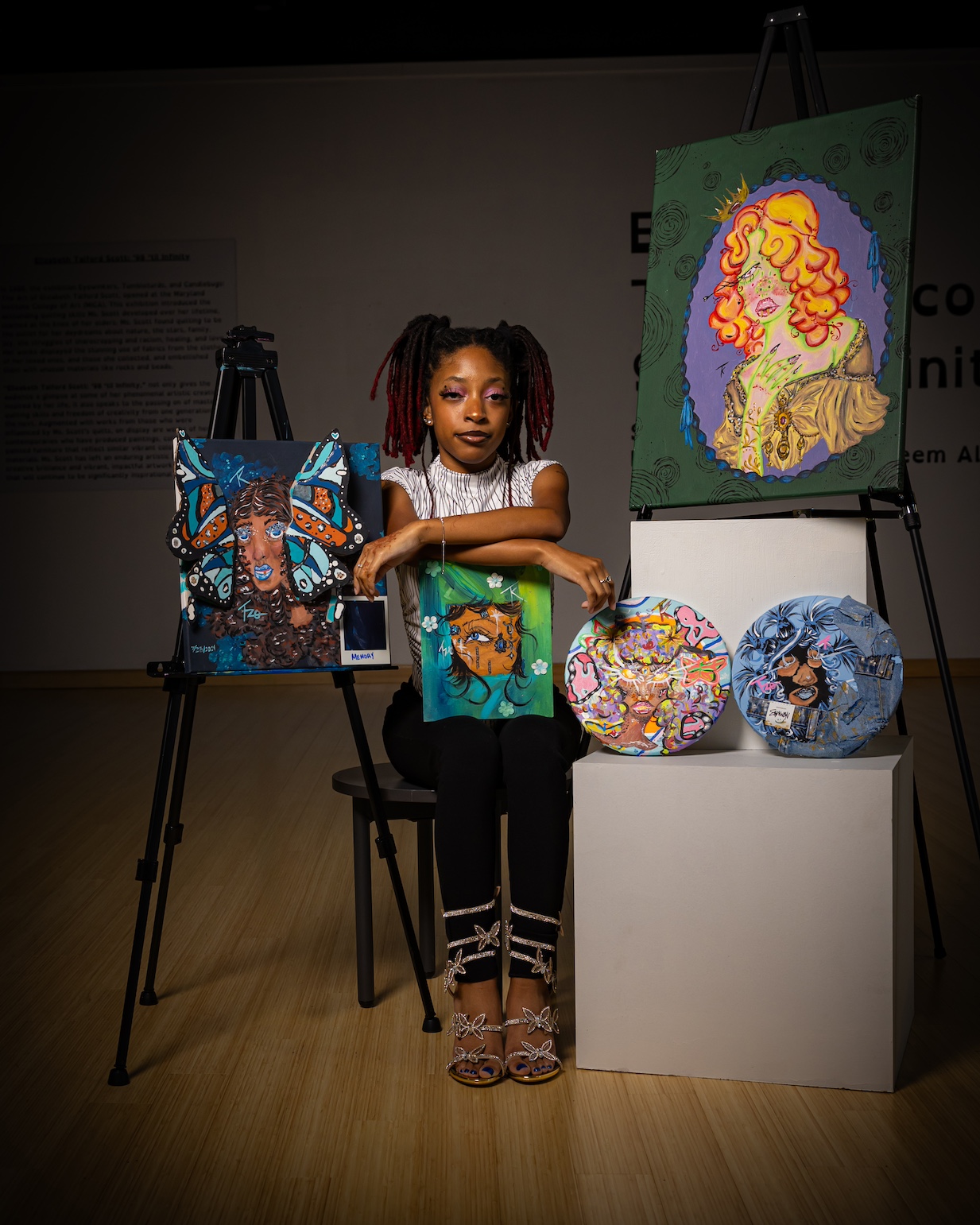
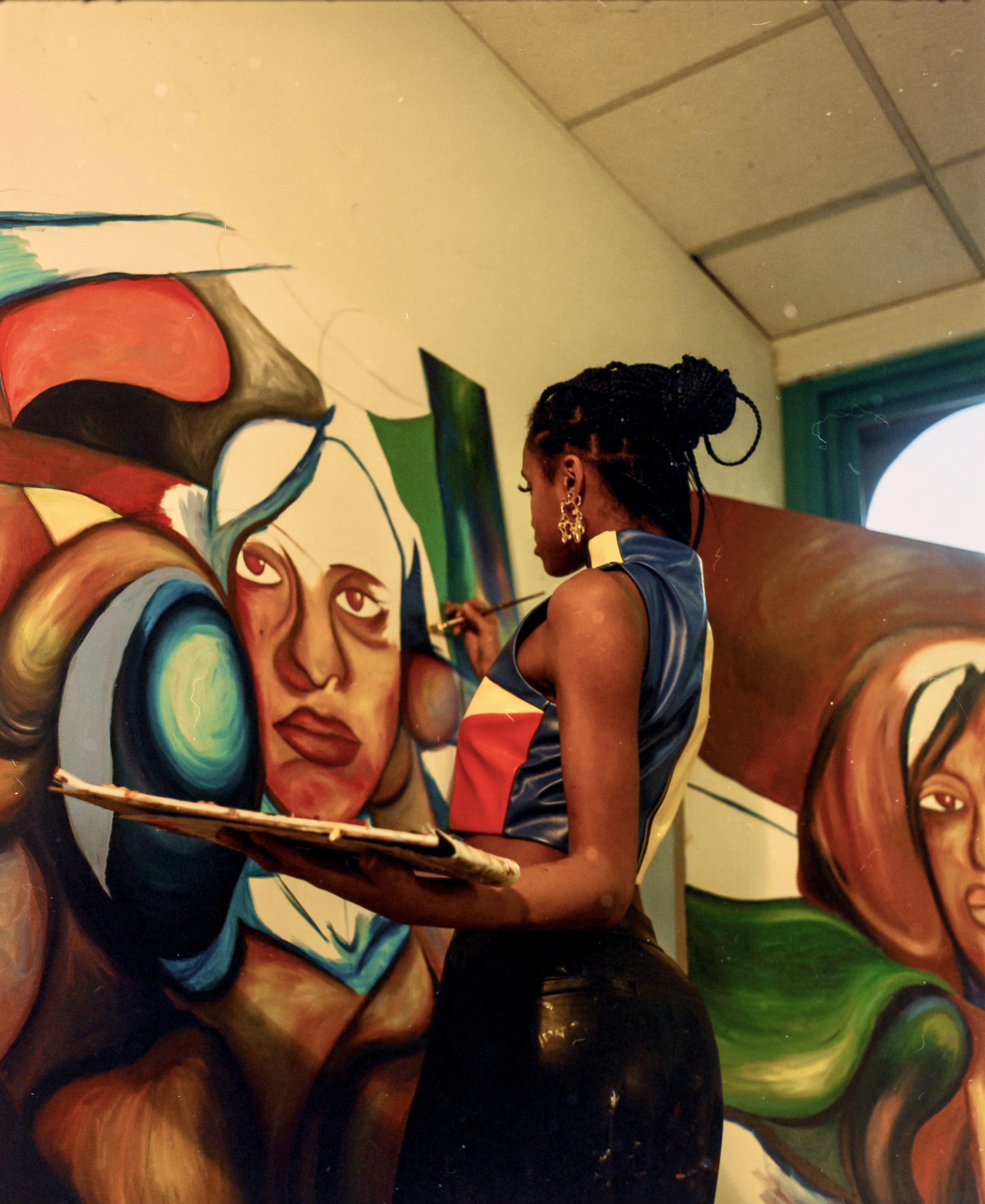
Meet SheROCKS 2026 Artist: Tori Carlisle (TzoArt)
Rooted in her upbringing in Maryland and a city-centered lifestyle, her work challenges narrow perceptions of urban environments, highlighting them as sites of creativity, movement, and possibility. As an emerging artist with a growing exhibition history, Tori reflects on finding confidence in her voice, learning from Black artists who came before her, and trusting experimentation as a core part of her process.
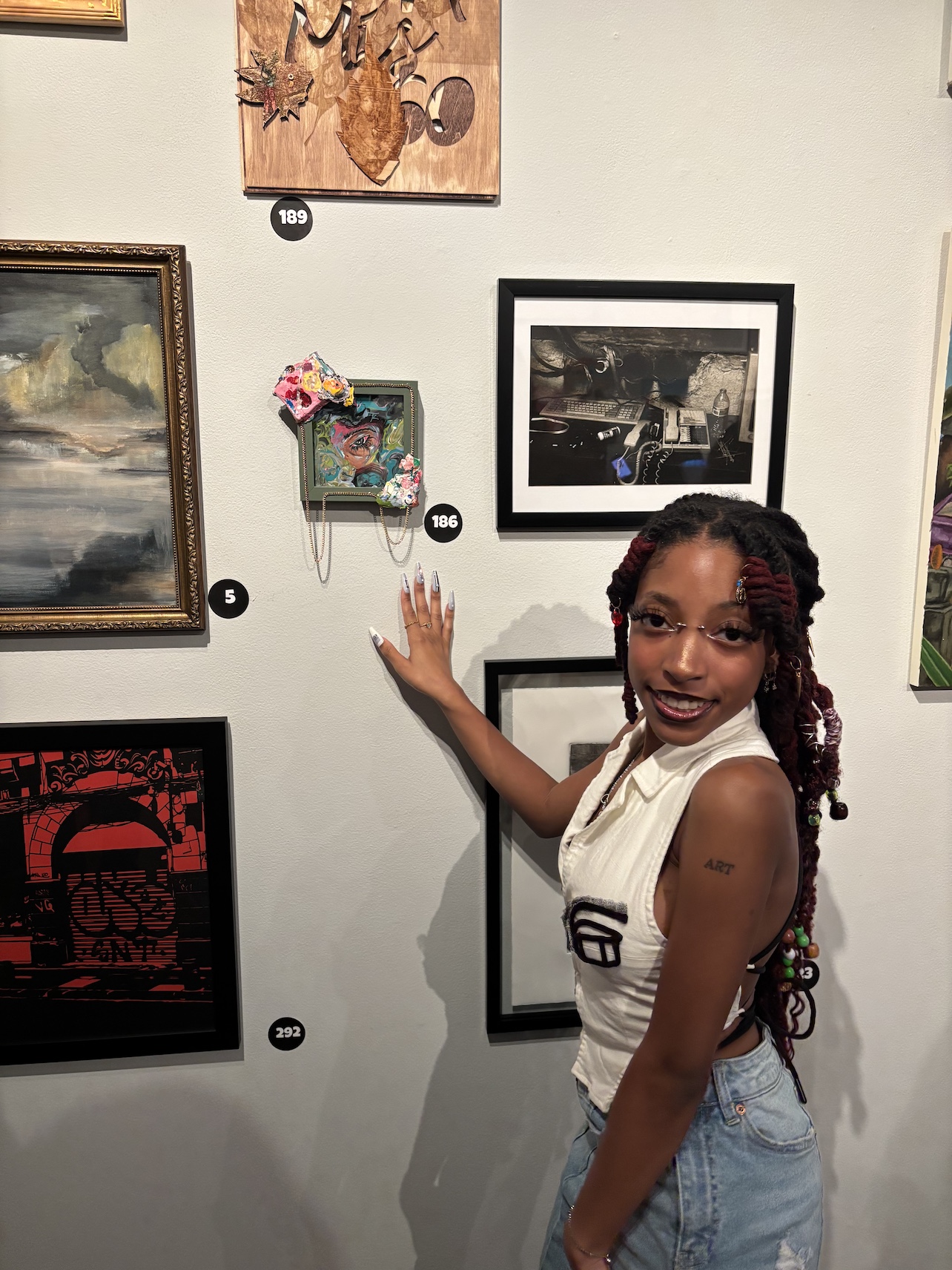
Q: What first drew you to the inner workings of the mind as a visual artist?
Tori: My first time working exploring the inner workings of the mind started when developing my AP portfolio in high school. My thesis was [about] how mental health affects artists and how they work.
Q: How do you decide which medium, or combination of mediums best brings a concept to life?
Tori: I feel like there is no singular medium that can do that. Only multiple mediums can achieve that, [bringing a concept to life].
Q: Growing up in Maryland and living a city-centered lifestyle, how does your environment shape the stories you want to tell visually?
Tori: Everyday where I live there are stories to tell. No day is the same and I don’t want it to be. Living in a city gives you constant room for inspiration to enter.
Q: You’ve shared your art “aims to bring light to people from urban backgrounds.” What narratives or experiences do you hope viewers see reflected in your pieces?
Tori: I hope that viewers can see that urban places aren’t as bad as they may seem or look on the outside. Urban backgrounds push for creativity and give you a creative outlet.
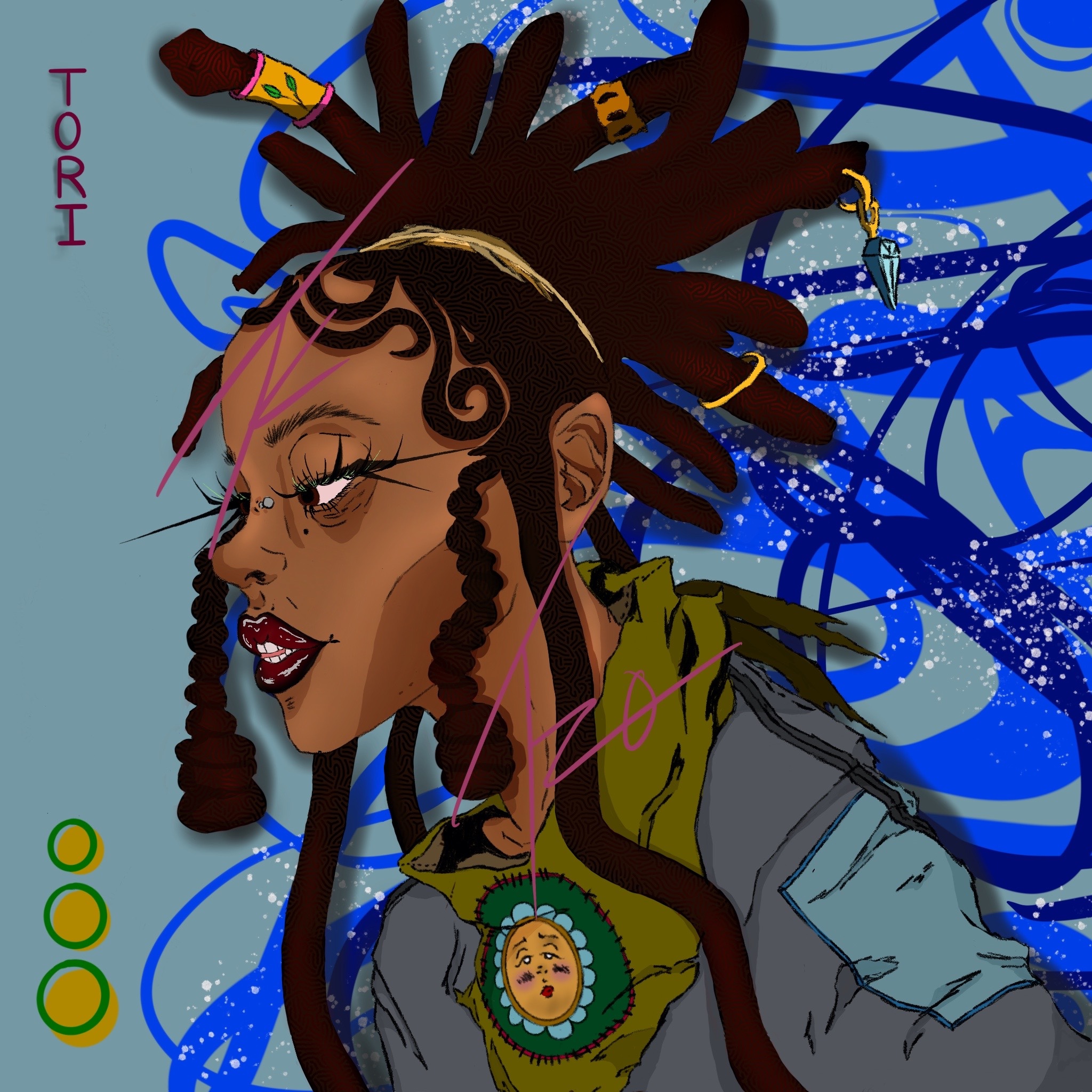
Q: You recently had your first solo exhibition showcasing your college portfolio. What did that milestone teach you about your voice as an artist?\
Tori: It taught me that being an artist is a passion and that it doesn’t matter what stage of your life you're in, you can inspire those older than you.
Q: What’s a medium or technique you’ve tested recently that surprised you?
Tori: The most recent medium that surprised me was using oil pastels and testing the limits of that.
Q: How do you balance scientific inspiration with emotional storytelling in your art?
Tori: In the past, my work focused more on mental health but as time goes on, I’ve focused more on human emotions and how that processes through the brain. I find it interesting to focus on a topic that is not really explored.
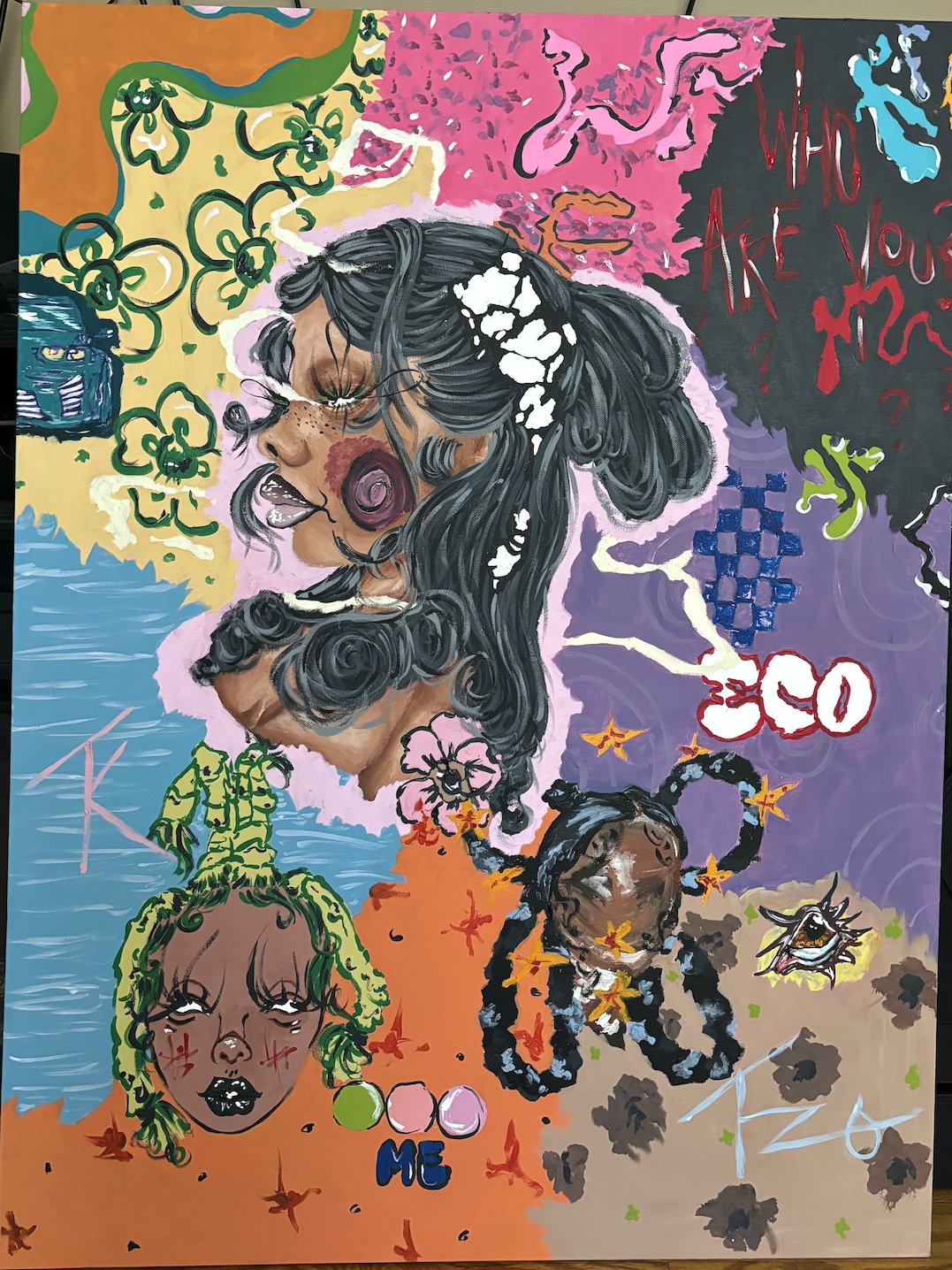
Q: As a college student, how has your academic journey expanded your understanding or approach to your craft?
Tori: During my academic journey I have learned more about African American art history and the periods of time in art. From this, it’s inspired me to be like the artists before me and make a way for myself.
Rapid Fire: What’s the one art tool or app you can’t go a day without using?
Tori: An app that I cannot go a day without using is Pinterest. Pinterest is filled with ideas and inspiration from all over the world.
Q: As you prepare for the March 2026 SheROCKS event, what part of presenting your work excites you the most?
Tori: The part that excites me the most is having more exposure towards my work and being able to be inspired by other artists as well.
Meet SheROCKS 2026 Artist: Avanna Duff
Avanna Duff reflects on Girlhood, a deeply personal body of work shaped by loss, self-inquiry, and the ongoing process of becoming. After losing her mother at 19, Avanna found herself suspended in emotional limbo, navigating early adulthood while searching for clarity, purpose, and identity. Through abstraction, she revisits her girlhood as both a site of healing and reclamation, using layered forms and intuitive gestures to explore identity as fluid, non-linear, and ever-evolving.
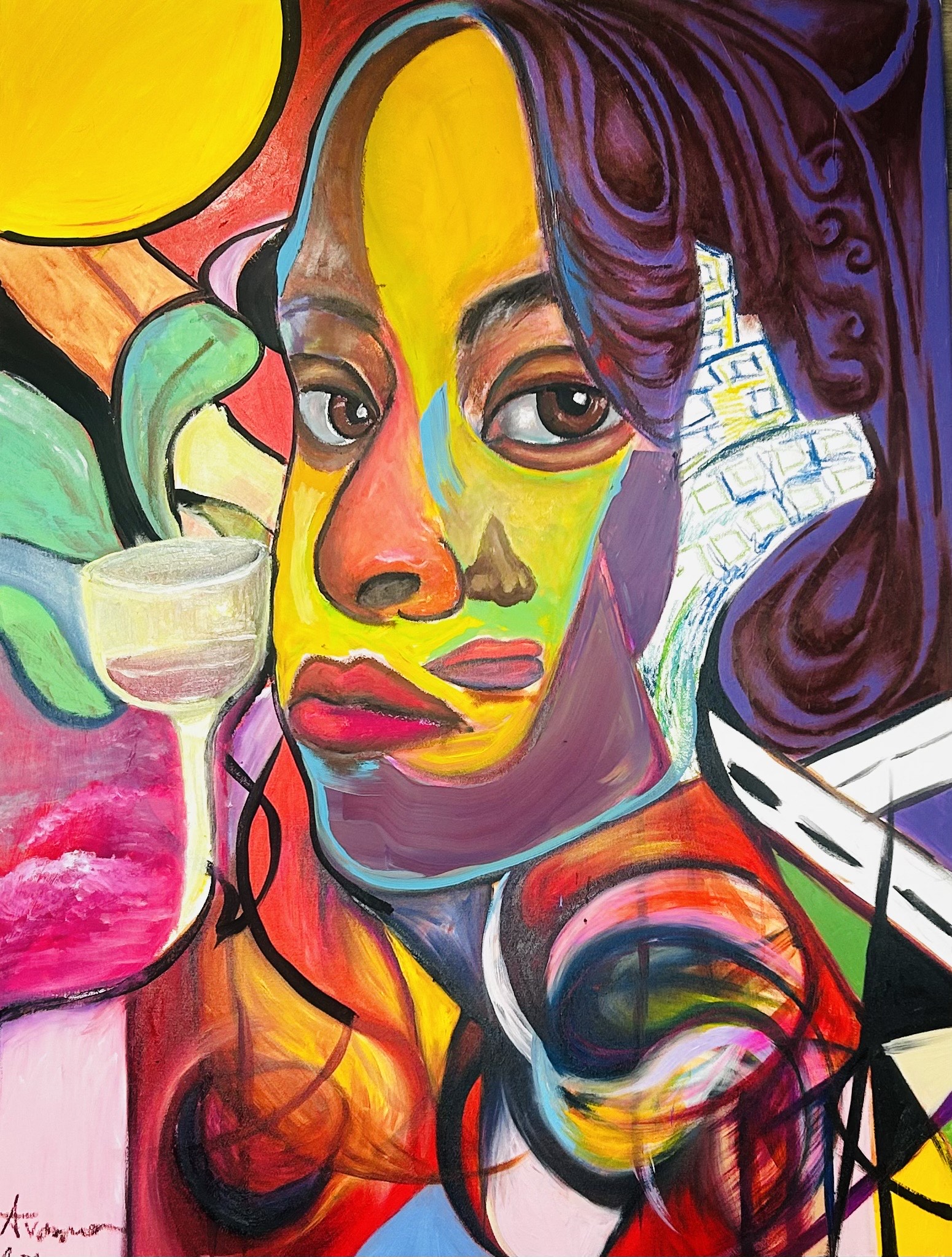
Q: Your most recent project “Girlhood” traces the inner shifts that shape womanhood. What was the first spark or moment that made you realize this was the story you needed to tell now?
Avanna: "Girlhood" represents a transformative journey of self-discovery and introspection, marking a turning point in my life. The sudden loss of my mother at 19 left a profound impact, causing me to feel stuck in a state of emotional limbo. As I navigate my early twenties, I've grappled with the challenge of rediscovering my identity and redefining my life's trajectory. Through revisiting my girlhood, I've been able to reconnect with my inner self, confronting the confusion and disillusionment that followed adolescence. This exploration has become a cathartic release, allowing me to reclaim my narrative and envision the woman I aspire to be. "Girlhood" is an invitation for others, particularly Black women, to reflect on their own stories, reclaim their voices, and embody their true selves.
Q: How did creating “Girlhood” challenge or expand the way you think about identity formation?
Avanna: For me, identity is a multifaceted construct shaped by internal reflections and external experiences, rendering it a dynamic and ever-evolving concept. Through my artistic practice, I've come to understand that identity formation is a non-linear, continuous process, with layers of meaning waiting to be uncovered. Unlike representational art, which can be readily understood, through abstraction my approach invites viewers to engage with the work on multiple levels, revealing new insights and perspectives. This layered narrative allows for a deeper exploration of the self, acknowledging that identity is a complex, ongoing conversation.
Q: This series speaks to the turbulence and beauty of becoming. Which piece in the, "Girlhood" collection feels the most personal to you, and why?
Avanna: A Tale Between Two Cities' is the piece that feels most personal to me in the 'Girlhood' collection. This work represents a pivotal chapter in my journey of self-discovery and artistic growth, capturing the turbulence and beauty of becoming. The decision to leave Atlanta and pursue my education in Buffalo, New York, was a deliberate choice to challenge myself and cultivate inner peace. Through this experience, I navigated the complexities of independence, confronting the pressures of solitude and the process of self-discovery.
This piece is a testament to the resilience and adaptability that have defined my path, as I strive to embody the best version of myself, both as an artist and an individual. It's a reflection of my journey, with all its triumphs and struggles, and serves as a reminder that becoming is a continuous process, often accompanied by uncertainty and self-doubt.
Q: You’ve shown work in celebrated spaces from Atlanta to New York. How have those artistic communities influenced your evolution as an artist?
Avanna: The artistic communities I've had the privilege of being a part of, from Atlanta to New York, have been instrumental in shaping my growth as an artist. Specifically, my time in Buffalo and Atlanta has been transformative. Buffalo taught me the value of community and the importance of connection, while Atlanta has reminded me of the power of roots and heritage.
This interplay between the two cities has been a catalyst for my evolution as an artist. Being in Buffalo allowed me to tap into a sense of resilience and determination, while Atlanta has grounded me in my identity and purpose. The contrast between these two environments has enabled me to synthesize my experiences and distill my artistic voice.
Through this journey, I've come to realize that my purpose is not tied to a specific location, but rather it's a culmination of the connections I've made and the lessons I've learned along the way. The artistic communities I've been a part of have instilled in me a sense of belonging and validation, allowing me to push boundaries and explore new creative territories. As I continue to grow and evolve, I'm grateful for the lessons and love that these communities have shared with me.
Q: Themes of empowerment and feminine strength appear often in your exhibitions. How do you approach expressing vulnerability without diminishing power?
Avanna: Embracing vulnerability is a fundamental aspect of my artistic practice, particularly when exploring themes of empowerment and feminine strength. For me, vulnerability is not a weakness, but a profound expression of strength that underscores the complexities of womanhood. It's about acknowledging the multifaceted nature of our experiences, and recognizing that our stories are both personal and universal.
Through my work, I strive to create a space where authenticity and honesty converge, allowing others to reflect on their own vulnerabilities and recognize that they are not alone. I believe that divine femininity is embodied in the diverse shapes, forms, bodies, curves, and lines that make up our world, and it's this diversity that gives us the power to redefine what it means to be a woman.By celebrating this diversity, I aim to contribute to a broader conversation that honors the full spectrum of feminine experience, acknowledging the vulnerability and strength that coexist within us. My goal is to create work that not only empowers, but also inspires empathy, understanding, and connection – ultimately, to create a sense of belonging that transcends individual stories.
Q: Many viewers see their own stories in your work. What role does audience interpretation play when you’re deciding how much of yourself to reveal in a piece?
Avanna: Audience interpretation plays a significant role in my creative process. I believe that art is a conversation between the artist and the viewer, and I'm drawn in by the mystery of knowing that people will bring their own experiences and perspectives to my work.When deciding how much of myself to reveal in a piece, I consider the balance between sharing my own story and creating space for others to insert their own narratives. I want my work to be relatable, yet open-ended, allowing viewers to find their own meaning and connection to the piece.I think it's beautiful when people see their own stories in my work, even if that's not exactly what I intended. It means that the piece has transcended its original context and become a part of their own narrative. In a way, it's a form of shared ownership – I'm sharing my story, and they're sharing theirs, and together we create a new understanding.Ultimately, my goal is to create work that resonates with others, and if that means revealing certain aspects of myself, I'm willing to be vulnerable in the service of connection. As an artist, I'm not just telling my own story; I'm creating a space for others to tell theirs.
Q: Your art steers avant-garde. What does “pushing the boundaries” look like for you as you continue to define your signature style as a visual artist?
Avanna: Pushing the boundaries means embracing vulnerability and risk-taking, allowing myself to be open and honest in my work, even if it makes me uncomfortable. It's about trusting my instincts and intuition, and being willing to fail or create something that doesn't quite work.I'm driven to transcend traditional notions of abstract art, redefining its meaning and representation in my generation. I'm committed to contributing to a legacy that builds upon the past, learning from it, and forging a path forward. My goal is to create art that sparks conversation, challenges assumptions, and inspires new perspectives – not just for my own growth, but for the artists who come after me.By pushing the boundaries, I'm staying true to my vision and staying excited about the creative journey ahead.
Rapid Fire: A color that instantly feels like “girlhood” to you — go!
Avanna: purple! :)
Q: What are you most excited for people to experience when they encounter your work at SheROCKS in March?
Avanna: I'm thrilled to be showcasing my collection at SheROCKS, and I'm confident that this event will be a pivotal moment in connecting with my peers and furthering the narrative of my art. I'm excited to share my work and be part of a community that celebrates women in visual and performing arts.
This event represents a significant opportunity for me to contribute to the conversation around identity, culture, and social justice, and I'm eager to hear the stories and perspectives of others. I'm looking forward to the connections and collaborations that will emerge from this experience, and I'm honored to be part of a movement that empowers women and amplifies their voices.
Meet SheROCKS 2026 Artist: Emily De Lima
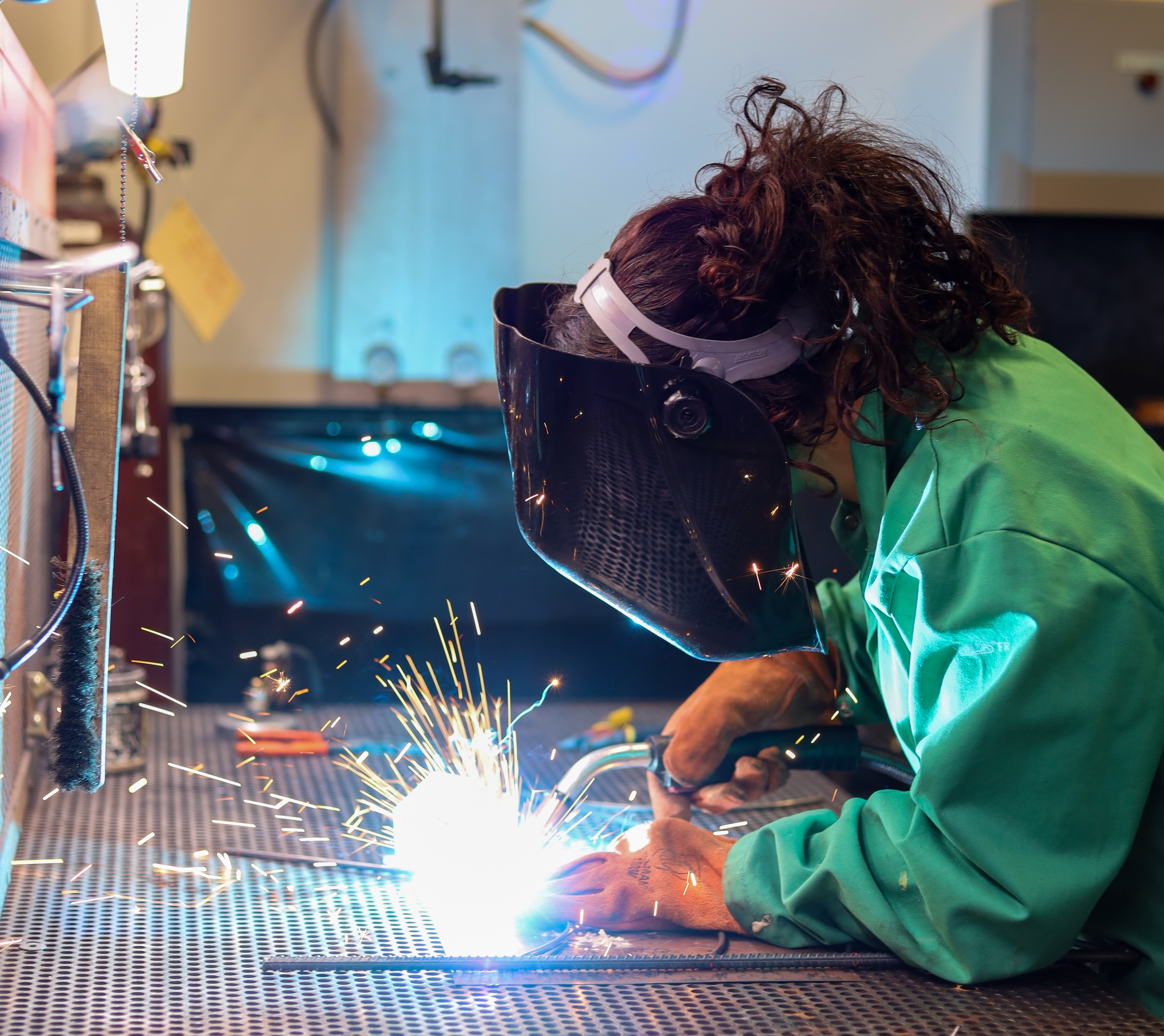
Some artists choose a medium and others choose exploration. Moving fluidly between architecture, visual art, sculpture, and photography, Emily De Lima builds worlds from sketches, discarded materials, and spontaneous ideas. Now based in Queens after graduating from Cornell University’s architecture program, Emily is shaping a practice that refuses limitation and thrives on curiosity. In this Q&A, she shares how experimentation guides her process, why “jack of all trades” feels like a compliment, and how every piece, whether a small collage or a building-scale concept—begins as a prototype with room to grow.
Q: You’re a multidisciplinary artist with work spanning architecture, visual art, sculpture, and photography. How do you decide which medium becomes the best for a particular idea or moment?
Emily: Since I’ve never been able to stick to just one medium, I’m constantly experimenting. I like to pick things up and figure out how they work and what they can become. Sometimes an image flashes through my mind and I sketch it out, and those usually turn into paintings. Other times, I just look around wherever I am and see what materials I already have lying around. I love using things considered scraps or trash. I’ll start cutting things out and assembling them, and an idea grows from there.
Everything is a prototype. I’m just trying things out, seeing what works. Smaller pieces become whole, whether that’s the scale of a painting or a building. They say, “A Jack of all trades is a master of none, but oftentimes better than a master of one.” I think there’s something beautiful about not mastering just one thing—staying curious and letting the process guide where the work goes.
Q: Much of your practice focuses on origin and cultural sensitivity. How has growing up as a Brazilian woman in America shaped the way you interpret space, material, and narrative?
Emily: I think a lot about humans versus shells. How the outer layers we carry affect how people see us. These shells appear on many scales; in the spaces we occupy, the clothes we wear, even the ways we carry ourselves. Often, they get in the way of us truly seeing each other as human.
I’ve always been a bit of a nerd, but because I didn’t fit the typical visual stereotype, I often felt very “othered” in the spaces I’ve occupied. At Brooklyn Tech, the specialized high school I went to, only 7% of the student body was Hispanic/Latino while I was there, and I was frequently overlooked or stereotyped. At Cornell for university, I was again a minority and I faced similar assumptions. The way I look has affected how seriously people, especially men, have treated me, and I’ve had to work a lot harder to be heard.
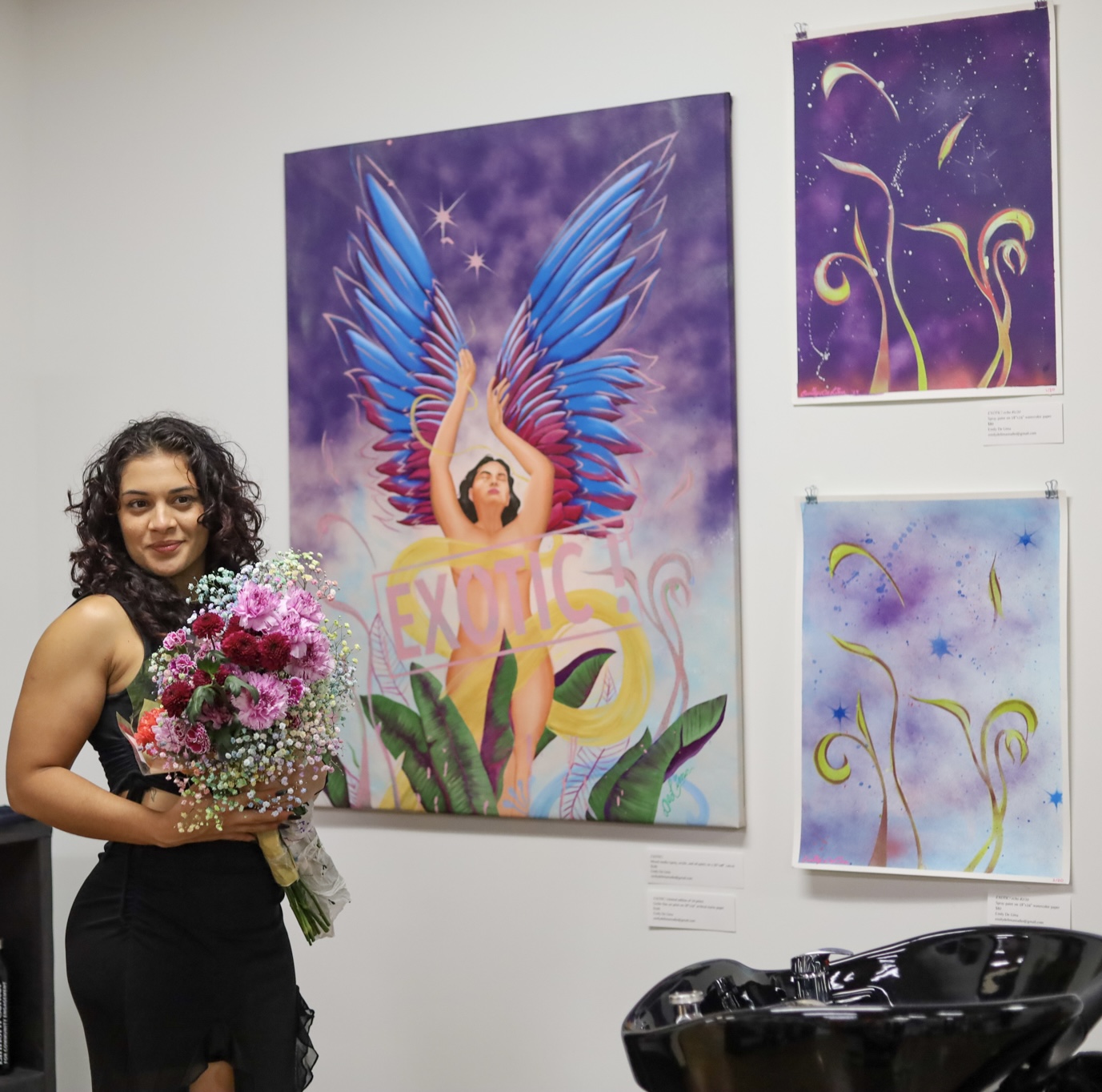
I poured these experiences into creating “EXOTIC!”. This ended up being my first exhibited piece, where I drew a parallel to the Brazilian Spix’s blue macaw. The macaw was targeted for its striking blue color and rarity, making it a prized trophy in the illegal bird trade. It was captured and admired, but rarely understood. Their beauty essentially became their downfall, collectors captured them faster than the population could recover, pushing the species to the edge of extinction. I have often been treated in a similar way, as a shiny object that people want to be seen with, but not listened to.
Q: Your installation “What We Grow” investigates the lasting effects of colonization across Brazil and the Caribbean. What compelled you to take on this history, and how did the collaboration with Cornelius Tulloch shape the project?
Emily: “What We Grow” really started with an architecture option studio I took at Cornell Tech in 2023. We worked closely with Ena McPherson, a Jamaican woman who was a pioneer in the urban gardening movement in East New York. Getting to know her made me notice how much Brazilian and Jamaican culture overlap. That pushed me into researching how plants, traditions, and knowledge moved through the transatlantic slave trade and ended up forming the worlds we grew up in. The similarities weren’t coincidence, but were the result of people carrying their worlds with them under unimaginable conditions.
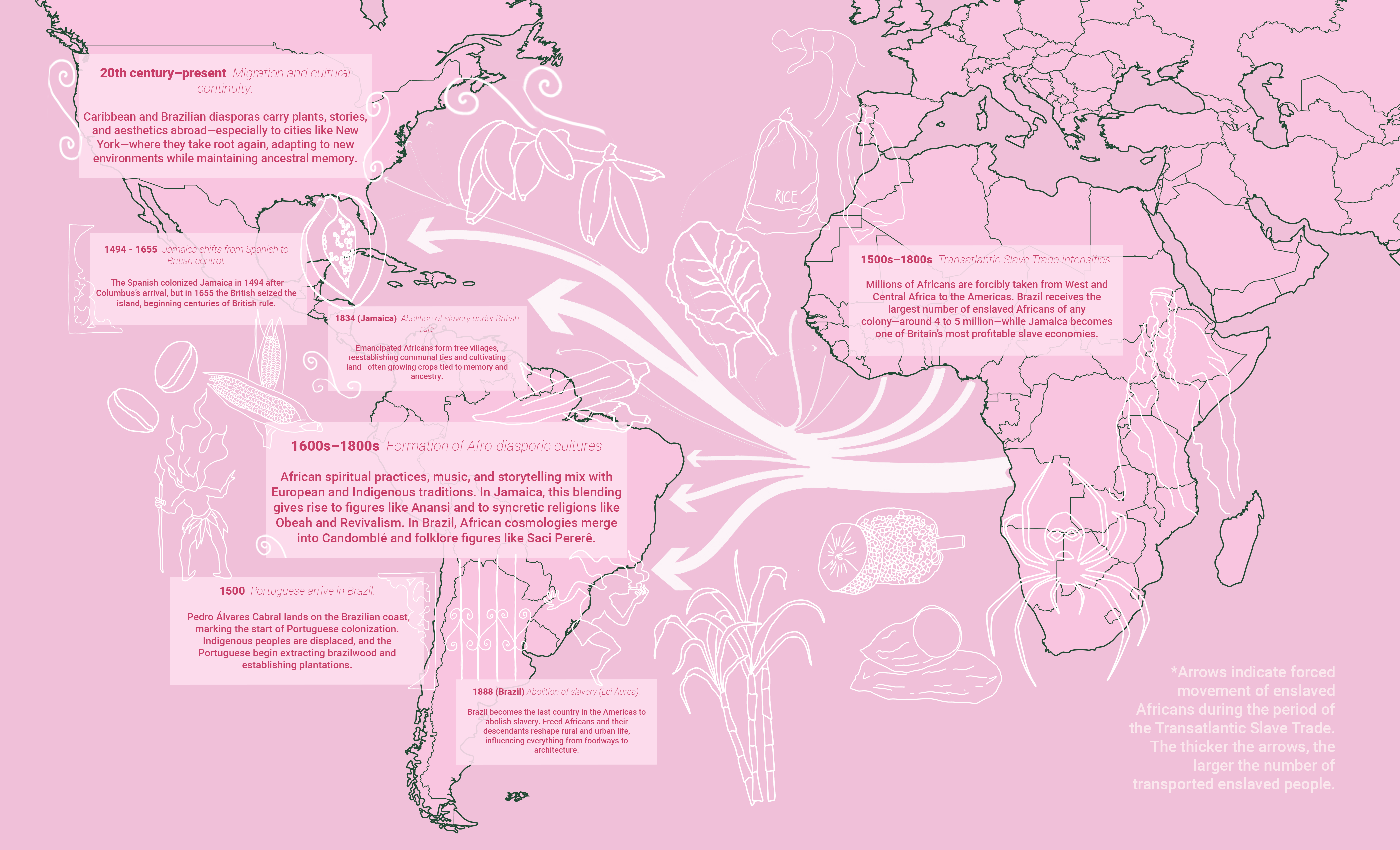
The collaboration with Cornelius Tulloch came naturally out of that. Cornelius was a former student of my professor, Peter Robinson, who’s career path blended art and architecture as I was aspiring to do. Peter saw the overlap in how we both think spatially and visually and encouraged the connection.
I applied to a grant opportunity through my school and was awarded to further the research I began in that studio. This culminated into “What We Grow,” a public installation that took place in Tranquility Farm in Brooklyn, NY.

Q: When you examine how knowledge is passed through craft and tradition, how do you see your own artistic practice contributing to that lineage of storytelling?
Emily: As times change, so do crafts and traditions. Existing practices are added to and transformed with new ways of making. For me, being Brazilian-American adds another layer to this as I’m constantly mixing influences from my Brazilian heritage with the culture I grew up with here in NYC. I’m particularly interested in how being an artist has also significantly shifted in a digital, hyper-capitalist age. It’s no longer enough to just be a skilled painter, you also have to build a presence, navigate both real-life and digital spaces, and find ways for your work to resonate in an oversaturated market. I want to make work that bridges traditional art and digital platforms.
Right now, I’m working on a short film where I take elements from physical pieces and adapt them for a digital video platform, exploring how craft and storytelling can evolve while still carrying the same lineage of care and knowledge.
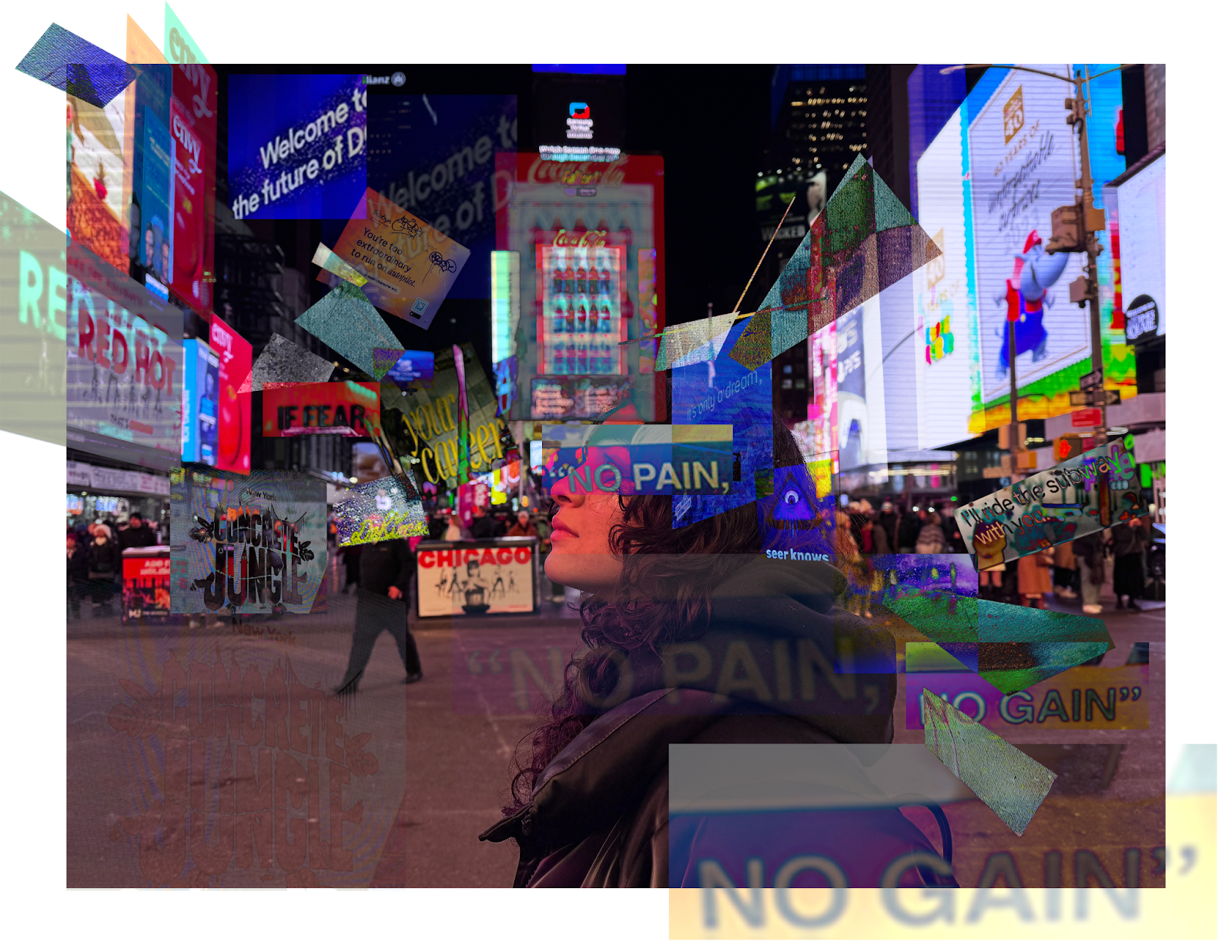

Q: With a background in architecture, how does spatial thinking influence the way you build worlds whether as installations, images, or objects?
Emily: Again, I think of everything as pieces that fit together to form a whole. From the screws that hold a structure together, to the columns that support a building, threads that keep fabric intact, layers of paint on a canvas. Every element matters, and everything connects in ways we don’t always expect. My process of building, testing, and letting the idea dictate its form comes directly from thinking like an architect, even when the work ends up on a flat surface.
Q: What questions are currently guiding your creative direction as you move into this next chapter of artistry?
Emily: I grew up in a very Catholic household and went to Catholic school from pre-K to 8th grade. I was always the kid asking too many questions, and that curiosity wasn’t really encouraged. For a long time, that pushed me to reject religion altogether. Now, I’m in a place where I’m reevaluating a lot of it. I’ve studied bits of different belief systems, and I’ve started building my own understanding of spirituality, one that mixes my appreciation for science with the way I see nature and the universe function.
The questions guiding me now are about how humans create meaning, how we inherit stories, and how we rewrite them. I’m interested in how identity is shaped by the things we’re taught versus the things we discover on our own. Those themes have already started appearing in my recent work, and I think they’ll keep leading me forward.
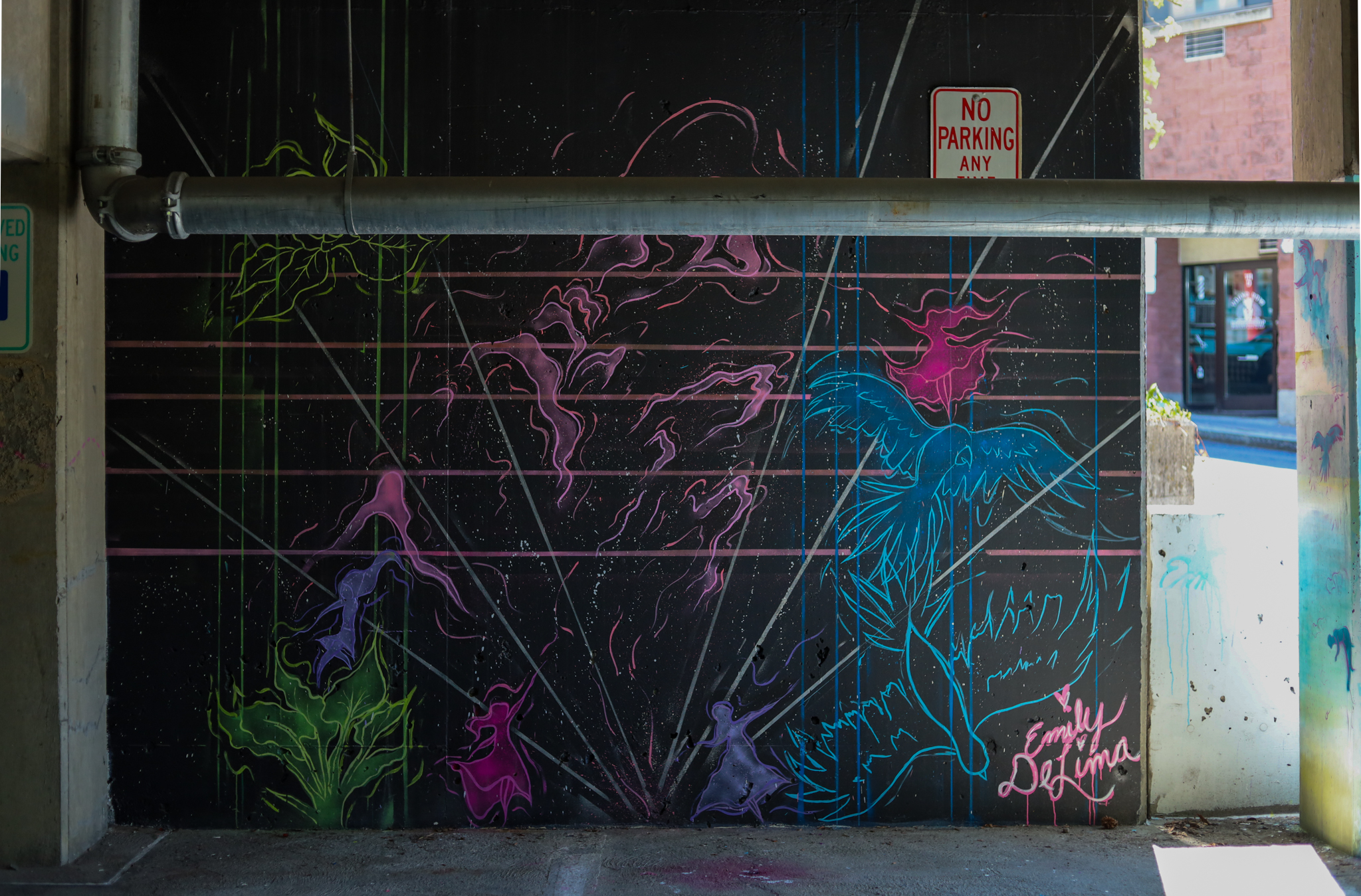
Rapid fire: One material you could work with forever — go!
Emily: Spray paint! I love the messy drips and how you can play with splatters and flicks. It lets me work fast, and experimentally, but it also forces me to adapt and embrace accidents.
Q: What are you most excited for audiences to feel or discover when they encounter your work at the March 2026 SheROCKS showcase?
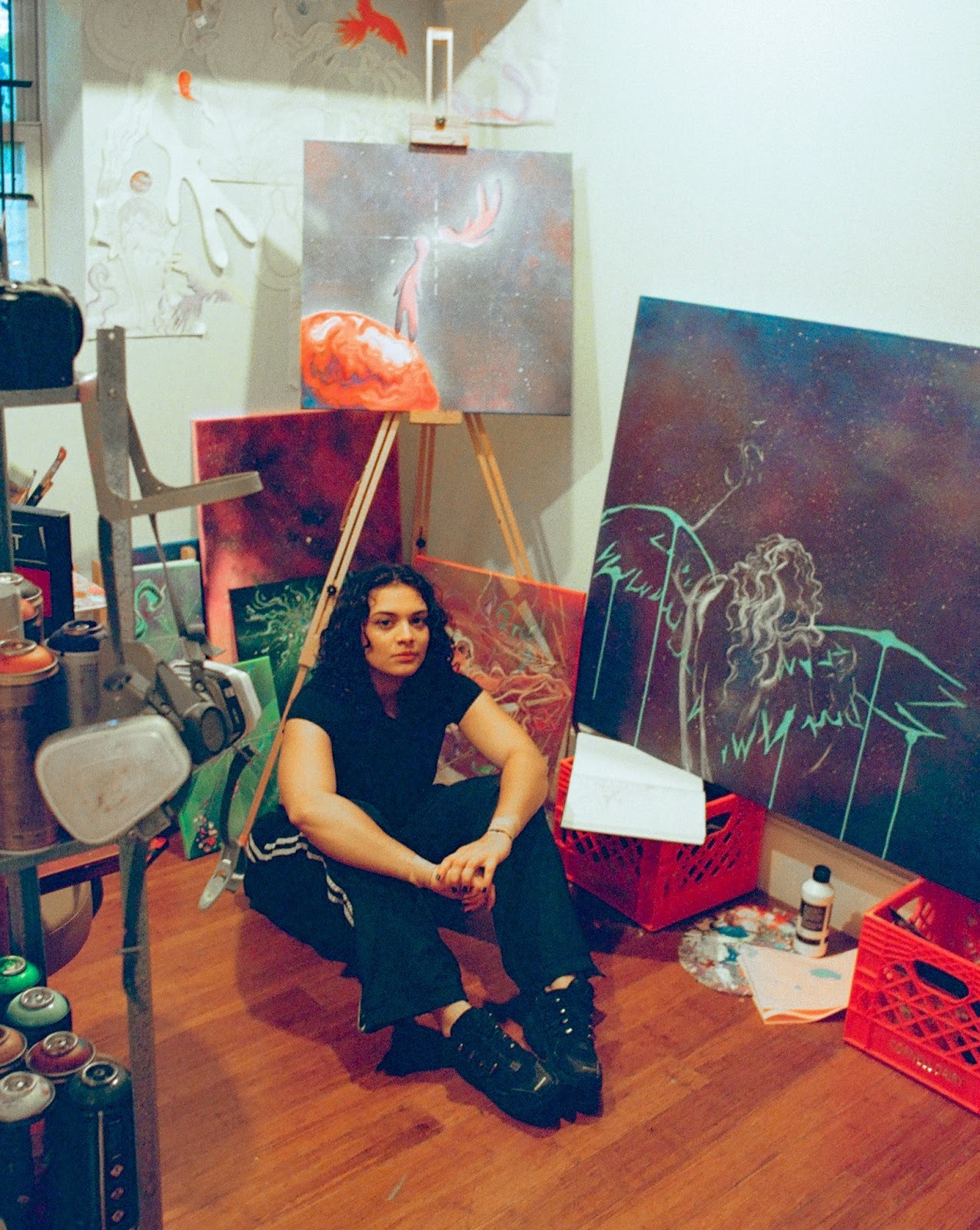
Emily: I’m excited to finally push my way into the art world. I graduated just last May, and since then I’ve been pouring myself into making new work and getting it out there. I’m looking forward to giving the audience a glimpse into my chaotic brain. I have a million ideas and I can’t turn them off.

Ai Makita on Animism, AI, and the New Materiality of Her Latest Work 'Metabolizing Machine'
In 2011, a tsunami following a 9.0-magnitude earthquake flooded the Fukushima Daiichi nuclear power plant in Japan. Causing the cooling systems to fail and power outage, engineers were left scrambling to resolve what had led to one of the most devastating nuclear emergencies in Japan’s history.
Multiple explosions caused radioactive fuel to spread across the atmosphere. This reactor meltdown subsequently caused increased radiation exposure and long-term effects that will have an adverse impact for years to come—on people, quality of life, environment and more.

“Machines were created to enrich human life, yet they also have the capacity to become tools of destruction. The Fukushima nuclear disaster made me feel this very viscerally,” said visual artist Ai Makita, remembering the events that took place.
“I was already interested in philosophy, but after the disaster I began studying the history of humans and technology through Heidegger, Arendt, and Aristotelian thought, she said. Reflecting on how the event reshaped her understanding of humanity’s relationship with machines and her own artistic development, she continued, “I started to question where our current rapid technological development might ultimately lead. There is a persistent sense of fear toward technology within me, and that fear fuels the imagination in my paintings.”

In this Q&A with Makita, we explore one of her most recent exhibitions, Metabolizing Machine, and learn more about her artistic exploration and discovery as she continues the discussion around the complex relationship between humans and machines through her work.
Timea Faulkner: Your paintings begin with photographs of machine parts and evolve through AI interpretation before you return them to physicality with paint. What draws you to this cyclical dialogue between hand and machine?
Ai Makita: The internet gradually became widespread when I was in middle school, so my generation lived in this interesting period where the digital world and the physical world began to merge. For me, physicality—material presence—has always been essential to making artwork. Yet at the same time, I felt something undeniably real existing beyond the digital screen. I still carry that dual awareness today, and it shapes the way I work.

Timea Faulkner: You’ve described moments where the AI misunderstood your prompts, leading to unexpected imagery. Do you see these “miscommunications” as creative collaborations or as moments of resistance?
Ai Makita: I think collaborating with AI is similar to building a relationship with another person. When you first meet, you don’t know each other and must try to understand one another. Even after forming a kind of closeness, disagreements still happen. Encountering perspectives different from your own leads to new ideas. I maintain a certain distance while interacting with AI almost like a close friend. When AI misinterprets my prompts in unexpected ways, I often find a kind of humanity in those misunderstandings—and I find that very compelling.

Timea Faulkner: What emotions or ideas do you hope viewers carry with them after experiencing Metabolizing Machine?
Ai Makita: Although I paint machines as if they are breathing, I want viewers to interpret my work freely. I use reflective highlights in my paintings so that the work and the viewer can resonate with each other in some way. Each viewer will take away something different—and I welcome that multiplicity.

Timea Faulkner: Growing up and studying in Tokyo, how did your surroundings influence your fascination with machinery and the blurred line between the organic and the artificial?
Ai Makita: I spent my graduate school years in Tokyo, but as an undergraduate [student] I lived in Tsukuba in Ibaraki Prefecture. Tsukuba is known as a science city, a center of advanced research that has produced multiple Nobel laureates. Although many people lived there, the city felt desolate. Almost dystopian, outside of the university and research institutes. Those four years in such an artificial environment had a profound influence on my imagination.
Timea Faulkner: The introduction of sculpture in Metabolizing Machine adds a new dimension to your work. How did moving from canvas to three-dimensional form change your understanding of space, material, and perception?

Ai Makita: My grandfather, father, and uncle were all sculptors, so I grew up surrounded by three-dimensional work. I always loved drawing, but I’ve also retained a strong interest in sculpture. Although I primarily work in painting, I have always approached the canvas from a three-dimensional perspective—seeking depth that pulls the viewer inward or forms that seem to push outward. Even the act of translating digital imagery into a physical painting can be seen as a transformation from 2D into 3D. I have long wanted to create sculptural works based on my paintings. Moving between two and three dimensions is something that has been with me since I was young.
Timea Faulkner: Your work references Masahiro Morioka’s essay on metabolism and machine life. What does the concept of “metabolizing” mean to you personally as both a human being and a creator?
Ai Makita: Metabolism is a fundamental concept of life. To make a painting feel living and dynamic, I use imagery that appears to shift or breathe on the surface. My aim is to create paintings that almost seem alive. Although this may not directly relate to metabolism, I have carried a strong sense of animism since I was a child—the distinctly Shinto belief that spirits can reside in non-living objects. I was raised Christian, but my father and grandfather both dedicated sculptures to temples, so I grew up deeply familiar with traditional Japanese spirituality. I think I was especially influenced by my father’s sculptures. Buddhist sculptures, in particular, holds an immense and enduring spirit within each individual form. Perhaps this is one reason why I strive to create images in my paintings that feel alive, animated with a sense of inner breath or soul.

Timea Faulkner: When you imagine a future where machines might “metabolize,” do you feel more hopeful or apprehensive about what that means for humanity?
Ai Makita: If AI were to surpass human capabilities to the point that it could autonomously replicate itself—essentially metabolize—that may mark the end of the human-centered world and the moment when machines overtake us. At the foundation of my work lies a fear of that future, a scenario often portrayed in science fiction that now increasingly resembles reality. We must actively understand the potential threat and potential salvation that machines may bring. We cannot blindly use the seductive technologies created by corporations and simply be absorbed into their profit structures.
Timea Faulkner: Many of your paintings balance fear and beauty, human vulnerability and mechanical power. How do you personally navigate that duality in your life and art practice?
Ai Makita: People often assume I am a male artist. I think it’s because of the motifs I use, the scale, and the intensity of my work. I am a woman, but I feel a strong masculine force within myself—a kind of ambition to constantly acquire something new, a drive toward the sublime. It is, in a way, the human will itself. Human society, which has progressed linearly through technological advancement, seems to have been built upon this masculine force. As an artist, I want to depict this structure metaphorically and continue exploring it through my work.

Timea Faulkner: You once said, “I can be a different artist in New York.” After working internationally, do you still feel that way? If so, how have these experiences transformed your artistic identity?
Ai Makita: New York has always been a special place for me. Although I am Japanese, I struggled with the difficulty of self-expression in Japan since childhood. The cultural pressure to suppress individuality can be fatal for an artist. I love Japan deeply as a beautiful, orderly, and comfortable place to live but values are diverse, and the first place that truly accepted mine was New York. The energy there is constant and visceral. Without the experiences I had in New York, I would not be making work at my current scale.
Timea Faulkner: How do you think artists today can better bridge the gap between art communities in Japan and those overseas?
Ai Makita: I believe Japanese artists should actively go abroad, whether for residencies or study—and preferably for longer periods and at a younger age. Before moving abroad, my world felt very small, but now I can see larger systems and long-term possibilities. There is so much powerful art in Japan, yet it remains enclosed within a closed ecosystem. This is a tremendous loss. Not only artists, but also gallerists and curators should be more proactive in connecting internationally.
Timea Faulkner: As you continue exploring the boundary between human and machine, where do you see your work evolving next — conceptually or technically?

Ai Makita: Going forward, I want to pursue both extremes at once: works that eliminate bodily presence entirely and feel purely mechanical, and works that emphasize materiality and human warmth. I don’t yet know what forms they will take. I shape my work while staying attuned to the atmosphere of the time. At the same time, I want to further explore the collaboration between AI and fine art. Many artists output AI directly as digital media, but in fine art, the use of AI is still primarily limited to image generation in the process. I want to create works that operate at the boundary of digital and analog—not just visually, but conceptually.
About the Ai Makita
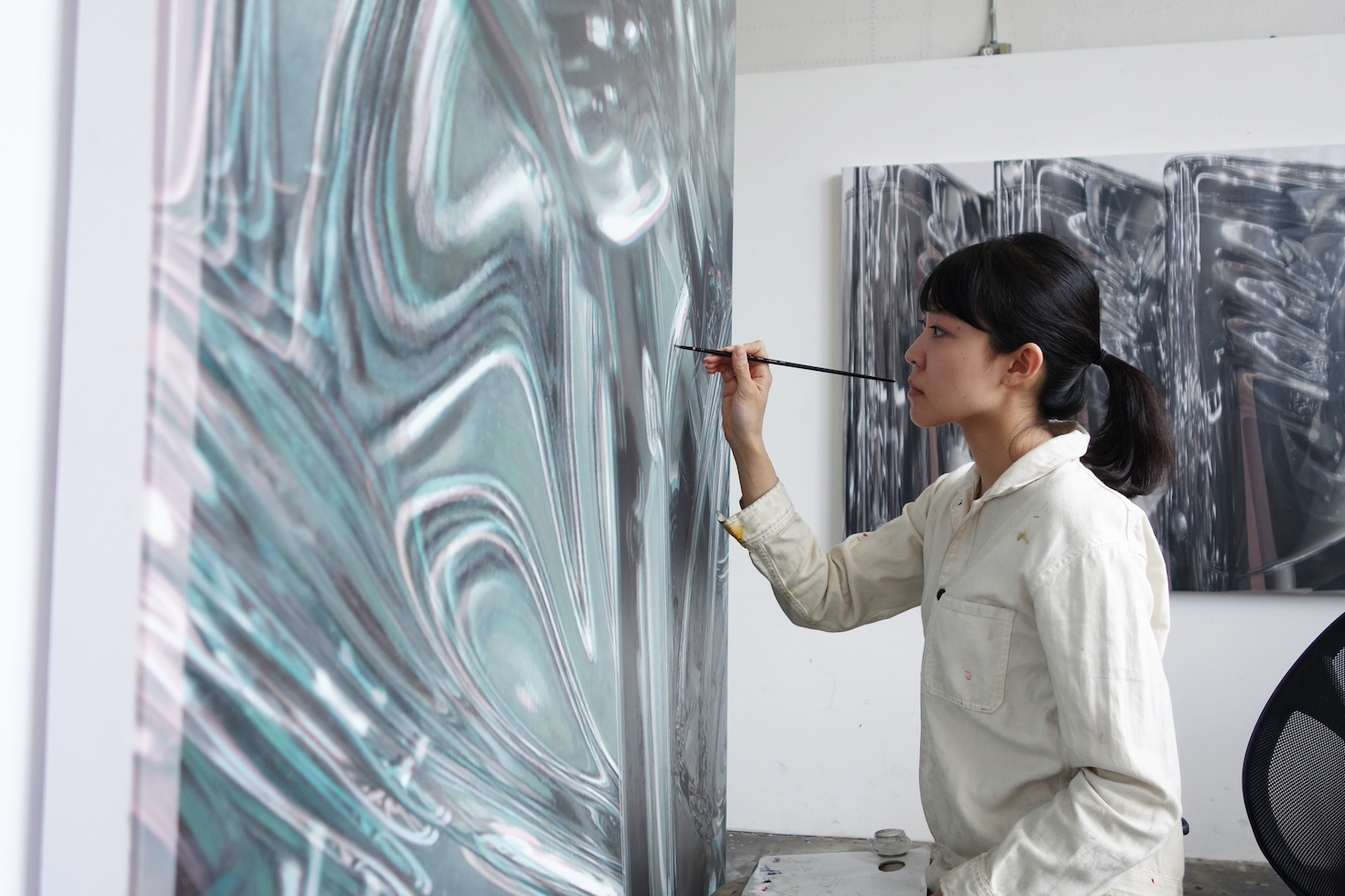
Ai Makita is a Tokyo-based painter whose work explores the border of artificial and natural, drawing inspiration from the relationships between human technology and the sublime. Makita received an MFA from Tokyo University of the Arts in 2013, as well as an MFA from Tokyo Gakugei University in 2010.Recent exhibitions includeForm and Matter,Tokyo 8min, Tokyo (2025);A Thousand Ways to Object-hood, Yu-Hsiu Museum of Art, Taichung (2025);The ComingWorld 2025–2075, GYRE Omotesando, Tokyo (2025);人工的神々–Man has, as it were, become a kind of prostheticGod, PARCEL, Tokyo (2024);Prosthetic Gods, The Some-thing Machine, New York (2024); and Interspecies, Mitsu-koshi Contemporary, Tokyo (2024). She has participated in residencies at The Fores Project (London), ART CAKE (NewYork), Residency Unlimited (New York), and the Varda ArtistResidency (Sausalito). Makita’s works are included in the collections of the Museum of Tokyo University of the Arts, Chiba Bank, and the Takahashi Collection.
About Metabolizing Machine

Metabolizing Machine was Ai Makita’s first solo exhibition at Baert Gallery and a pivotal presentation within her ongoing practice. Developed over more than a decade, the body of work traces its origins to the aftermath of the 2011 Fukushima nuclear incident—a moment that confronted Makita with the alarming truth that human-made technologies can evolve beyond the control or comprehension of their creators.
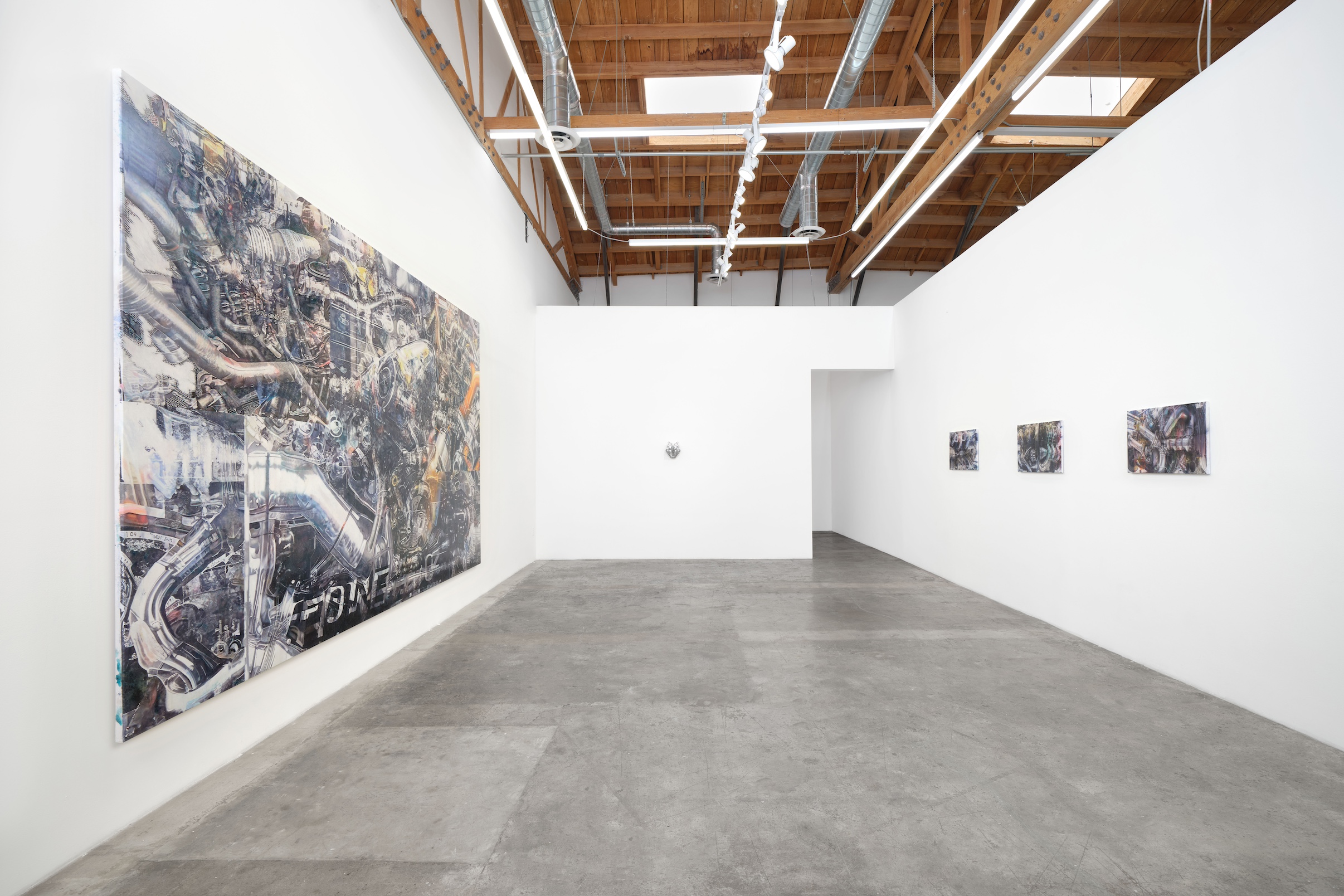
In this series, Makita visualizes the unsettling possibility of machines morphing into living organisms, translating collective anxieties about technological overreach into vivid, biomorphic paintings. The exhibition’s title draws from Masahiro Morioka’s 2023 essay Artificial Intelligence and Contemporary Philosophy, which reflects on philosopher Hans Jonas’s theory of “metabolism” and its implications for modern machine society. Jonas’s distinction between living beings and artificial life—the presence or absence of metabolism—became a central, generative idea for Makita as she explored the boundary between the mechanical and the organic.

Meet SheROCKS 2026 Artist: Brianna Chantel Woodard
Steeped in the cosmic energy of the ’70s and the soulful nostalgia of the ’90s, Brianna Chantel Woodard brings a vibrant, time-bending perspective to contemporary storytelling through illustration. Her art is both a tribute to the culture that raised her and a love letter to the people and moments that shaped her. During this Q&A, Brianna opens up about the memories that guide her, the purpose behind her preservation of Black joy, and the powerful ways motion, tradition, and innovation show up in her work.
Q: What continually draws you back to the 70s and 90s, and how do they help you tell modern stories about Black culture and your own lived experience?
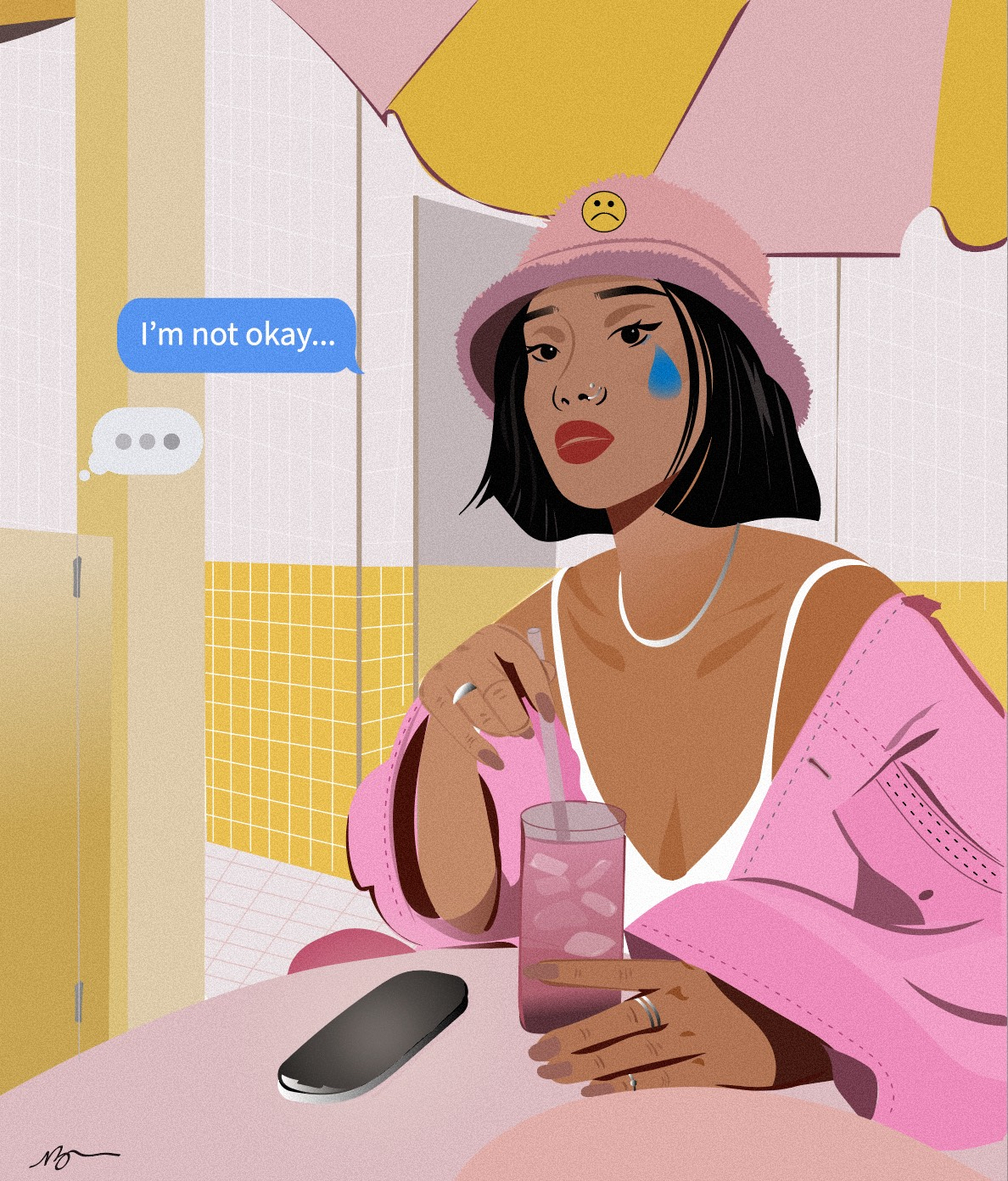
Brianna: The ’70s and ’90s were eras that embodied Black expression in its fullest form, through fashion, art, music, and culture. I’m drawn to the vibrant colors and cosmic energy of the ’70s, while the ’90s carry a nostalgic warmth for me as a ’90s baby. My art becomes a visual manifestation of everything that shaped me. When I tap into these eras, I’m revisiting memories, honoring my family, and celebrating the culture that raised me. By blending these aesthetics with contemporary design, I show how timeless our stories truly are.

Q: What role does cultural preservation play in your creative process?
Brianna: It’s at the center of everything I do. My work is a love letter to the people and moments that built me. I want my art to hold our joy, our everyday beauty, our small victories — the things that don’t always get documented but deserve to be. Preserving culture, for me, is simply honoring the truth that we’ve always been more than what the world tries to reduce us to.
Q: Can you share a moment when you felt your art truly bridged generations?
Brianna: A moment that showed me my art could bridge generations was when my grandma bought the very first item I ever posted on Etsy—a coffee mug with my retro design of a Black woman with an afro. She was so excited. Now it’s her favorite cup. Seeing her cherish something I created reminded me how deeply our stories can resonate across time.
Q: How did your adolescence — shaped by isolation and health challenges — influence your art today?
Brianna: Growing up isolated made me pay attention to what most people overlook. I spent a lot of time alone with my imagination, creating worlds I could escape to. That season taught me intentionality, softness, and resilience. Now, when I create, I’m always thinking about how to bring warmth, comfort, and affirmation into the work.
Q: What does motion symbolize for you when representing Black bodies and Black futures?
Brianna: Movement symbolizes freedom and becoming. It reminds me that we’re not fixed — we evolve, we stretch, we rise. I use motion to show our joy, our fluidity, our refusal to be boxed in. For me, capturing Black movement is a way of saying: we are infinite, and the future bends with us.

Q: What emotions or messages do you hope people carry after experiencing your work?
Brianna: I want people to feel seen and celebrated. I hope people walk away with pride in who they are and a reminder that beauty can be found in everyday moments.
Q: How do you choose which memories, travels, or references to depict?
Brianna: I choose the moments that stick with me. I pay attention to the things that spark emotion. If something feels like it has a story attached to it, I try to honor it visually.
Q: How do you balance honoring tradition while experimenting with new styles or mediums?
Brianna: To me, tradition and innovation can exist in the same breath. I’m constantly exploring new mediums and techniques because I want my work to evolve in a way that mirrors our culture—expansive, layered, and ever-evolving. Honoring tradition grounds me, but it also pushes me to reflect on the present and imagine what comes next.
Rapid fire: One retro color palette you could use forever — go!
Brianna: Burnt orange, mustard yellow, warm brown, and deep berry!
.png)
Q: What are you most excited for audiences to feel or discover at your March 2026 showcase?
Brianna: I’m excited for audiences to see the evolution of my work, but also to feel the heart behind it. If someone walks out feeling inspired, affirmed, or a little more connected to their own story, then I’ve done my job.
Hardwiring memories and Cementing Connection Through Art: Meet Dandora Sillah
Walking through the Hammer’s biennial exhibition Made in L.A., curated by Essence Harden and Paulina Pobocha, I paused when I arrived at these pinwheel-like frames. Gravitating toward floral-shaped objects is almost instinctual for me. From trying to suck nectar from honeysuckle flowers to grabbing handfuls of sunflowers in the summers as a kid, the shapes are nostalgic.
These photo frames — pieces of someone else’s life — gave rise to that same nostalgia. Flashing back to the open field of pinwheels in Kansas City I saw on the cross-country drive from Maryland to L.A. with my mother, my mind connected Widline Cadet’s Shifting Skies (2025) to my own mental archive of memories and experiences I hold close. “When’s the last time I flipped through the family albums at my parents’ house?” I thought.
Cadet’s photographs became a time capsule taking me back to grabbing huge albums falling apart, photographs separated by endless pages with rectangular plastic slots, and negatives tucked into envelopes throughout the pages.
If we observe closely, art has a way of bringing up memories that are hardwired at the core of our being. Rising multidisciplinary artist Dandora Sillah has translated personal and emotional memories into visual storytelling through her artwork — work that also evokes a sense of connectedness to the memories, places, and experiences that resonate with us most.
Timea Faulkner: Walk us through your creative process. Are there any rituals, sounds, or visual references that ground your work?
Dandora Sillah: It often starts with something I notice in the world today. A moment or feeling can trigger a memory from years ago, or even connect me to something I've learned about the history of Sierra Leone. Sometimes what inspires a piece isn't something that happened to me personally, but something I witnessed or felt deeply. When that happens, the colors, smells, and emotions come rushing back, and I translate that energy into a visual story that bridges past and present. A moment will often take me back. Maybe something I see, hear, or feel that suddenly reminds me of a time in my life or someone close to me. From there, I start sketching what I remember, letting that image grow into a painting. If the memory feels blurry, I'll look at a reference just to capture the movement, but once I begin, I'm locked in. I don't need music or anything else around me. I'm completely present, having fun, and everything just starts to flow as the memory comes to life on the canvas.
Timea Faulkner: You often describe your work as rooted in your West African heritage and your experience growing up between cultures. When did you first begin to see those influences showing up in your art?
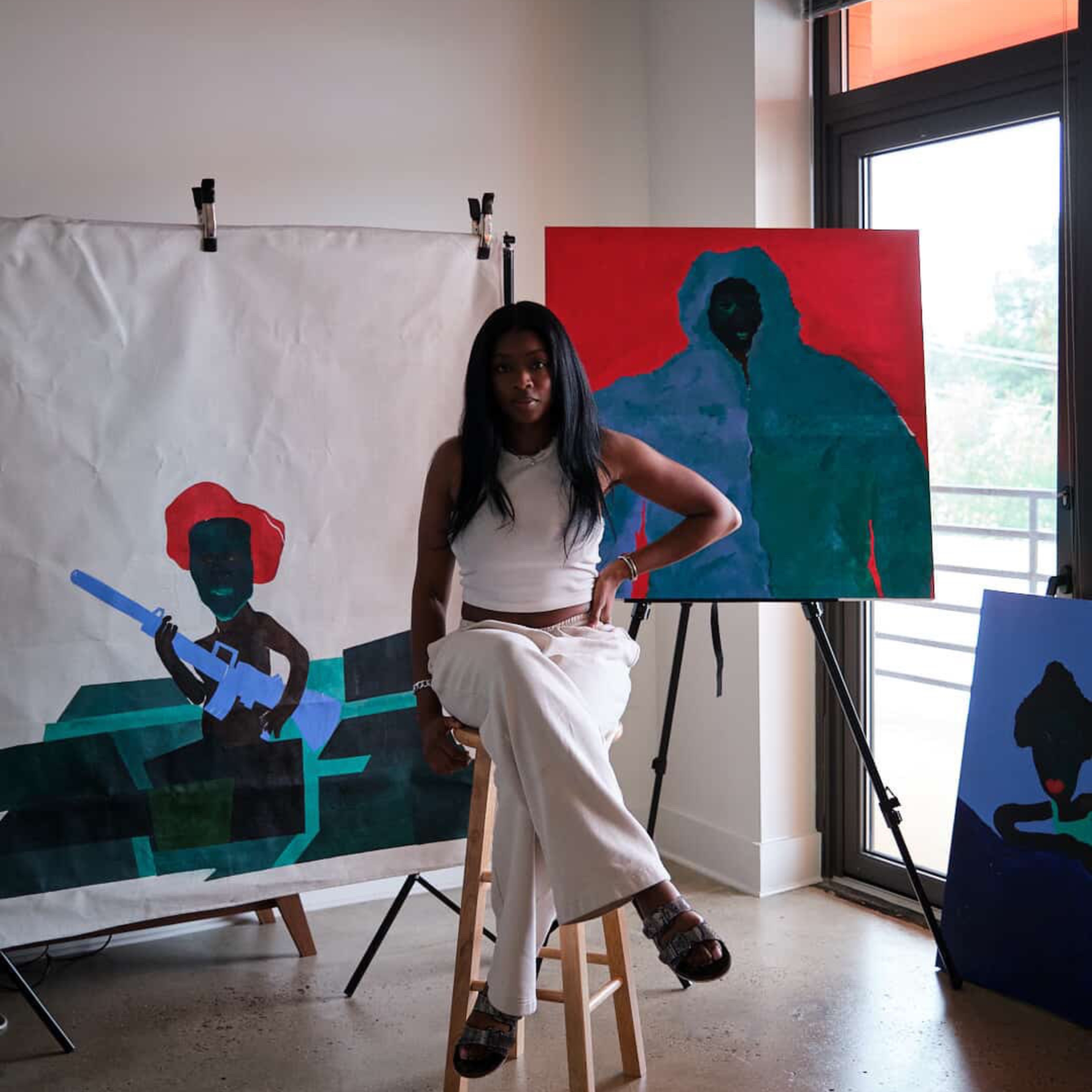
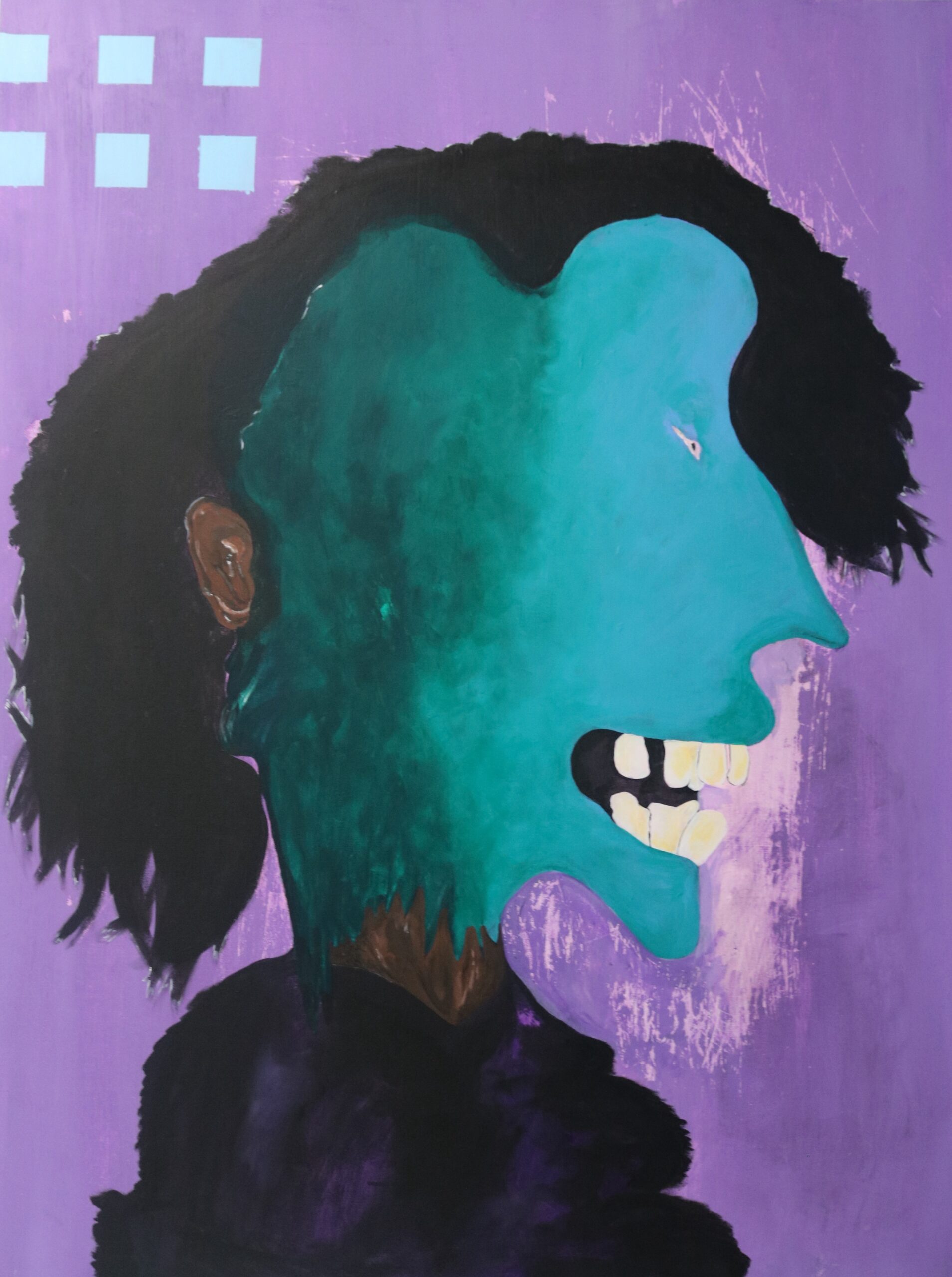
Dandora Sillah: I began to see those influences when I set out to paint a face that gradually became a mask. In that moment, I recognized the mask as a reflection of myself, shaped by living between my African and American identities. It revealed how I was often perceived through different lenses and guided me toward using art as a way to explore identity and belonging. Growing up in Brooklyn and being Sierra Leonean deeply shaped how I see the world. I went from attending a school where I was the only Black girl in my class to later being surrounded by many cultures; Jamaican, African, and all shades of brown. That shift opened my eyes to the beauty of diversity and helped me understand identity in a broader way. In Brooklyn, it was easier to tap into culture, and that sense of community and difference continues to influence how I translate my experiences into art.
Timea Faulkner: As an artist who works across painting and illustration, how do those mediums speak to each other in your process?
Dandora Sillah: Illustration is where the story begins for me. It helps me shape the narrative, the characters, and the meaning behind the work. Painting is where the feeling comes in. I love working with texture; it's what brings the story to life and gives the art emotion and depth. Together, they allow me to connect both storytelling and feeling in one piece.
Timea Faulkner: I’ve read that Delphine Adama Fawundu is an influence of yours. What about her work or approach speaks most to you?
Dandora Sillah: Delphine Adama Fawundu inspires me because she stays deeply connected to her culture and is intentional with texture and color. She travels to capture real experiences and references for her work, and watching her approach reminds me to stay committed, to keep exploring, and to let my own art grow with the same care and purpose.
Timea Faulkner: Are there other artists, mentors, or cultural figures who’ve shaped your artistic journey in unexpected ways?
Dandora Sillah: Yes! Mentors like Frances Fawundu, who is also an art therapist, has shaped my journey in unexpected ways, showing me how art can heal and connect people. Jacob Lawrence is another huge influence. His use of shape, color, and history, especially in depicting life during the Great Depression, inspires how I tell stories through my own work.
Timea Faulkner: Most recently, you participated in DC Design Week. The DMV has such a vibrant arts scene with strong diasporic roots. How has being part of this community shaped your practice or opportunities?
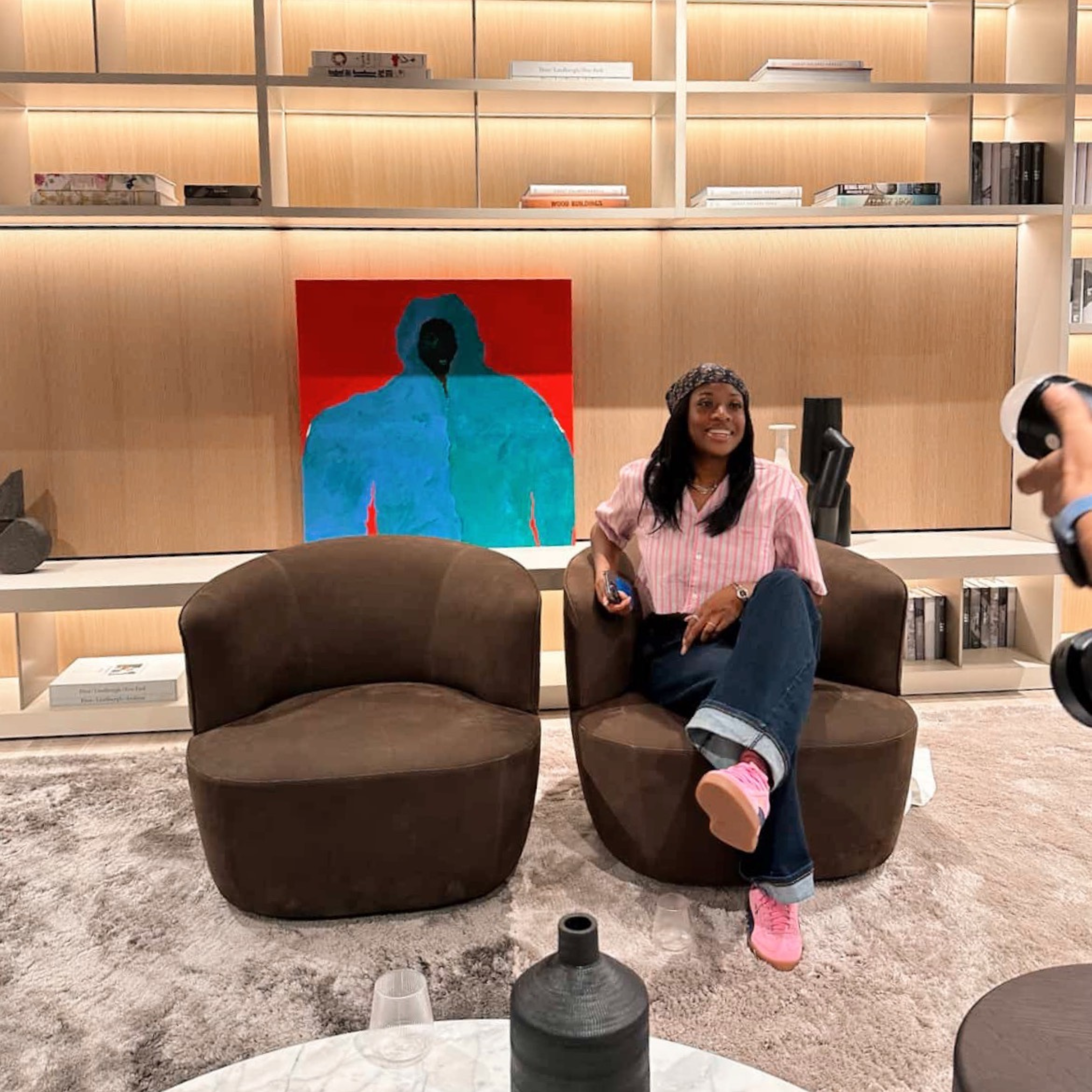
Dandora Sillah: I’ve lived in the DMV area for about ten years, even though I’m not originally from here. The area has become a part of me, and I’ve learned so much from its community. I work with children, creating art with them and sharing my own pieces to inspire their creativity. Participating in DC Design Week brought a strong sense of appreciation for my work, which motivates me to continue engaging with the community and expanding my presence here.
Timea Faulkner: As an emerging artist, when people encounter your work for the first time, what do you hope they walk away feeling or remembering?
Dandora Sillah: I hope people walk away understanding the story I'm telling. I hope they feel seen in their own experiences; whether it's being misunderstood, going against the grain, or being the "black sheep." Even if my work draws from specific cultures or memories, I want it to reach anyone who has ever felt different or out of place, to remind them that their experience matters and can be celebrated through art.
About the Artist
Dandora Sillah is a multidisciplinary artist based in the DMV area. Born in New Jersey and raised in Brooklyn by Sierra Leonean parents, her work is deeply rooted in her West African heritage and the experience of growing up between cultures. Through painting and illustration, she transforms memories of family, friends, and childhood into visual stories that explore identity, belonging, and the emotional landscapes of Black and immigrant life. Influenced by photographer Delphine Adama Fawundu, Dandora's practice reflects an ongoing dialogue between cultural memory and contemporary expression. Her work often weaves together personal narratives with elements of pop culture, highlighting how tradition and modern life intersect in shaping identity. She studied at Mercer County Community College before earning her degree in Graphic Design from Bowie State University. Her art serves as a visual archive; celebrating love, lineage, and the layered beauty of everyday existence.

Bisa Butler Creates Portrait Quilts That Shares the Black Experience
This Women’s History month, we commissioned artist Aniko Aliyeva to celebrate the work of incredible women in visual arts.
Today, we recognize artist Bisa Butler. Her intricate portrait quilts tell the stories of the Black experience in technicolor. Each fabric is carefully selected as she translates historical photos into brilliant works of art.
The fiber artist has shared it can take hundreds of hours to complete just ONE quilt.
In an interview with Print Magazine, Bisa shared, “Quilts are tombs of history. Printed fabrics give you a date and time. If I’m using oranges and blues and dayglow flowers made of polyester, you know that fabric is from the 70s because they’re not making fabric like that anymore.”
The New Jersey native holds her BFA from Howard University and a Master’s in Art and Education from Montclair State University.
This April, she will be honored by the American Folk Art Museum (AFAM) alongside Faith Ringgold and Brian Donnelly (KAWS) for their 60th Anniversary Gala at Gotham Hall in New York.

Women Artists Take Forefront at Biennale Arte 2022
2005 became a groundbreaking year for the 51st edition of the Biennale when Maria de Corral and Rosa Martinez would become the first two women to curate the exhibition for the first time in its history.
This year, the exhibition, which features 213 artists, spotlights more than 180 women. Many of the featured artists are also indigenous, people of color, or non-binary artists. A choice which this year's curator Cecilia Alemani says is "a deliberate rethinking of man's centrality in the history of art and contemporary culture."
While women have been primary drivers in many facets of contemporary art culture, many of their stories have not been shared broadly by being given the space to exhibit at world-renown exhibitions like Biennale.

During a recent interview with ArtNews, Alemani said that she "made a point of focusing on women artists because [she] wanted to try to bring to the surface those stories that have been considered by many to be minor. Surrealism, Futurism, all those movements—they all had female artists."
In the exhibition opening to the public on April 23, there are heavy themes of surrealism and many new artists being featured alongside historic artists---quite different from the previous Biennale's. We can appreciate the space Alemani is also making for indigenous women in the arts.
"It is an important element of the show, not just because they are Indigenous, but because they bring to the forefront a different way of storytelling that is not the traditional one," she shared with Alex Greenberger for ArtNews.
The La Biennale di Venezia was set back a year due to the global pandemic, giving Alemani space and time to carefully curate this year's exhibition. In some ways, the pandemic and its impact on many of the participating artists truly influenced its direction.
The international exhibition "Milk of Dreams," titled after the book by Leonora Carrington (1917–2011), will take place in the Central Pavilion (Giardini) and in the Arsenale in Venice, Italy.
"The Milk of Dreams was conceived and organized in a period of enormous instability and uncertainty, since its development coincided with the outbreak and spread of the Covid-19 pandemic. La Biennale di Venezia was forced to postpone this edition by one year, an event that had only occurred during the two World Wars since 1895. So the very fact that this exhibition can open is somewhat extraordinary: its inauguration is not exactly the symbol of a return to normal life, but rather the outcome of a collective effort that seems almost miraculous," said Alemani.
The exhibit includes 213 artists from 58 countries; 180 of these are participating for the first time in the International Exhibition. There will be 1,433 works and objects on display, and 80 new projects were conceived specifically for the Biennale Arte. More importantly, let's celebrate the fact that women artists are shining bright, loudly, and boldly at this year's exhibition.

E06 – Deborah Anderson | Diversity in Animation & Protecting the Creative Spirit
